Heavy-Duty Titanium-Claw Wave Soldering is gaining attention among manufacturers handling large, dense, and thermally demanding circuit assemblies. These machines combine rigid titanium claws, controlled preheating, and stable solder-wave contact. The result is a more repeatable process for industrial controls, automotive electronics, power supplies, and telecommunications hardware.
IPC’s 2024 Electronics Industry Impact Report highlights continuing pressure for stronger production reliability, traceability, and skilled-process control. IPC J-STD-001 and IPC-A-610 also emphasize solder joint quality, cleanliness, component security, and inspection discipline. Market research from Grand View Research identifies automation, miniaturization, and higher manufacturing consistency as important forces shaping soldering equipment demand. The figures vary between reports. That is worth remembering.
Dr. Jennie S. Hwang, a recognized soldering authority, has said, “Soldering is both science and art.” Her observation fits heavy-duty wave soldering well. A titanium claw may look simple, yet its alignment, thermal exposure, conveyor speed, and maintenance determine the final joint. Operators notice the difference when a 500-millimeter board leaves the wave with even coverage and minimal bridging. They also notice it when flux residue collects beneath a connector. Not every large machine performs equally. Some models offer impressive capacity but weaker process visibility. Others provide excellent controls but limited flexibility for unusual board geometries. This guide compares seven leading Heavy-Duty Titanium-Claw Wave Soldering Machines through practical criteria, including load capacity, titanium durability, thermal stability, solder pot design, automation, serviceability, and long-term operating value. Reliability is never automatic. It must be measured, maintained, and occasionally questioned.
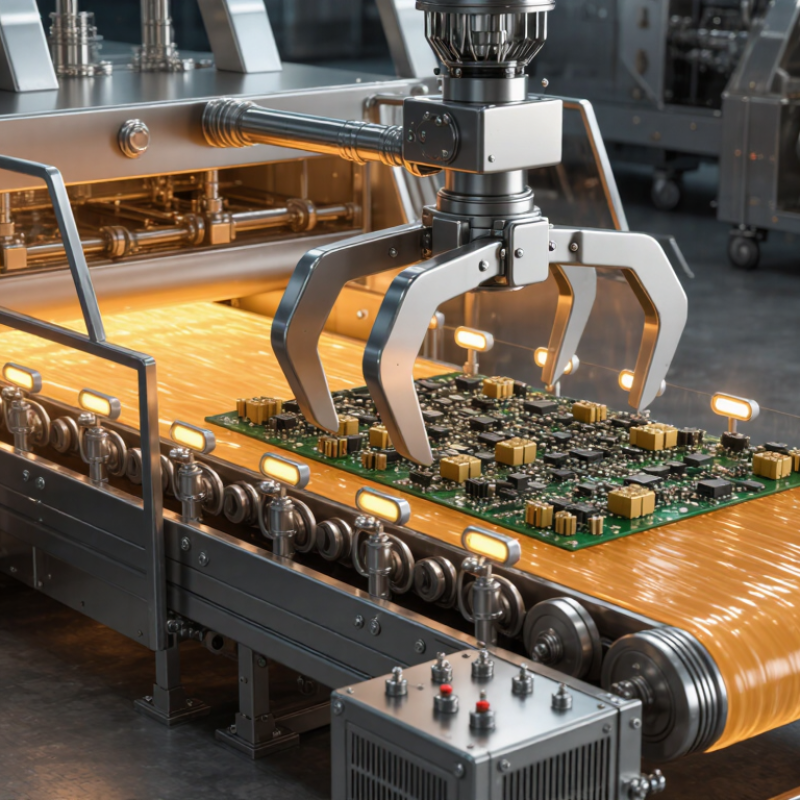
Heavy-duty titanium claw wave soldering machines are automated systems for soldering through-hole circuit boards. A heated solder wave contacts exposed component leads beneath the board. Titanium claws grip and transport the pallet through preheating, fluxing, soldering, and cooling zones.
The claw matters. It supports heavy panels, maintains alignment, and reduces vibration near the solder pot. Titanium resists corrosion from flux residues and molten solder better than ordinary steel.
The machine should also provide adjustable conveyor speed, stable preheat control, nitrogen compatibility, and accessible maintenance points. In a real production line, these details affect joint consistency more than impressive brochures.
Capacity is rising. The World Semiconductor Trade Statistics forecast global semiconductor sales at 611.2 billion dollars in 2024, a 16.0% annual increase. That growth increases pressure on assembly equipment and operator efficiency. IPC workmanship standards also emphasize repeatable solder coverage, lead protrusion, cleanliness, and process control. A serious evaluation should record wave temperature, conveyor speed, solder height, and defect rates during trials. Do not trust one successful board.
Some claws still deform under uneven loads. That is easy to miss. Heavy-duty should mean verified load capacity, not simply thicker metal. Maintenance records, thermal profiles, and spare-part availability deserve equal attention when comparing the seven best machines.
7 Best Heavy Duty Titanium Claw Wave Soldering Machines?
Selecting an industrial wave soldering machine requires more than comparing prices. The strongest candidates combine seven practical features: titanium claws, stable preheating, accurate flux control, nitrogen capability, solder-pot durability, conveyor precision, and traceable process controls. Titanium claws resist solder wetting and corrosion, but they still require inspection. Misalignment can scratch boards or interrupt transfer.
IPC’s 2024 World PCB Production Report estimated global PCB production at about 89.7 billion dollars in 2023. That scale increases pressure for repeatable throughput and lower rework. A suitable machine should maintain consistent wave height across changing board sizes. It should also support adjustable preheat zones, closed-loop temperature monitoring, and accessible maintenance points. Ask for measured thermal profiles, not only brochure claims. Small details matter.
Energy use deserves attention. The International Energy Agency reports that industrial motor systems can represent more than 50 percent of industrial electricity consumption. Conveyor efficiency and controlled heating therefore influence operating cost. Nitrogen systems may reduce oxidation, yet gas consumption needs verification. I would test the machine with real assemblies, including heavy copper areas and mixed components. A glossy trial board proves little. Service response, spare-part availability, and operator training should be documented before purchase. A cheaper machine may become expensive after one unstable soldering run.
Seven Leading Titanium Claw Wave Soldering Machine Options
Heavy-duty titanium claw wave soldering machines support demanding through-hole production with stable board movement and controlled solder contact. Titanium claws resist corrosion, flux exposure, and repeated thermal cycling. In practice, I look for seven useful machine options: reinforced claw systems, adjustable rail models, high-capacity solder pots, precision preheat designs, quick-release maintenance systems, modular conveyor units, and nitrogen-compatible configurations.
Each option suits a different production concern. Reinforced claws handle heavier panels, while adjustable rails support varied PCB widths. High-capacity pots improve temperature stability during long runs. Precision preheaters reduce thermal shock, although poor profiling can still damage sensitive assemblies. Quick-release systems shorten cleaning time. Modular conveyors simplify upgrades. Nitrogen-compatible designs may reduce oxidation, but operating costs require careful review.
Tips: Check titanium claw spacing before installation. Confirm the conveyor accepts your largest board. Measure immersion depth with a test panel. Inspect claw tips every shift for solder buildup. A clean claw improves alignment. Record solder temperature, conveyor speed, and preheat values for each product. Do not rely only on factory settings. They are often too general. I have also found that operators sometimes ignore rail wear because the machine still runs. That decision can create uneven contact and inconsistent solder joints. A small logbook, verified by production and quality staff, provides more reliable evidence than memory.
| Option | Recommended Production Profile | PCB Width Capacity | Conveyor Speed | Preheat Configuration | Titanium Claw / Finger System | Solder Pot Capacity | Typical Operating Temperature | Approx. Installed Power | Best Use |
|---|---|---|---|---|---|---|---|---|---|
| Option 1 Heavy-Duty Nitrogen Line |
High-volume lead-free production with continuous operation | 50–400 mm | 0.5–2.2 m/min | 5 zones; forced-air or infrared; approximately 3.0 m | Adjustable titanium fingers with reinforced stainless-steel transport rails | Approximately 600 kg of molten solder | 245–285°C solder temperature | Approximately 42–55 kW | Automotive, industrial controls, and high-duty assembly lines |
| Option 2 Wide-Board Production |
Large-format boards and mixed through-hole assemblies | 80–550 mm | 0.4–1.8 m/min | 6 zones; extended preheat tunnel; approximately 3.6 m | Wide titanium claw conveyor with independently adjustable board supports | Approximately 700 kg of molten solder | 245–290°C solder temperature | Approximately 48–62 kW | Power supplies, control cabinets, and large industrial PCBs |
| Option 3 High-Throughput Dual-Wave |
High throughput where both turbulent and laminar solder waves are required | 50–400 mm | 0.6–2.5 m/min | 5 zones; closed-loop temperature control; approximately 3.0 m | Heat-resistant titanium fingers with quick-adjust pitch mechanism | Approximately 500 kg of molten solder | 245–285°C solder temperature | Approximately 40–52 kW | Dense through-hole boards and assemblies with varied thermal mass |
| Option 4 Compact Heavy-Duty Cell |
Medium-volume production with limited floor space | 50–350 mm | 0.5–1.8 m/min | 4 zones; forced-air preheating; approximately 2.4 m | Titanium claw fingers with tool-free width adjustment | Approximately 350–450 kg of molten solder | 245–285°C solder temperature | Approximately 30–40 kW | Contract manufacturing and flexible mixed-model production |
| Option 5 Low-Oxygen Lead-Free System |
Oxidation-sensitive lead-free soldering and improved joint consistency | 50–400 mm | 0.4–2.0 m/min | 5 zones; controlled nitrogen preheat chamber | Titanium fingers designed for low-dross conveyor operation | Approximately 550–650 kg of molten solder | 250–290°C solder temperature | Approximately 45–58 kW | Fine-pitch through-hole assemblies and long production runs |
| Option 6 High-Mass Thermal Platform |
Boards, connectors, and assemblies requiring substantial heat input | 80–450 mm | 0.3–1.6 m/min | 6 zones; high-capacity forced-air and infrared combination | Heavy-section titanium claws with reinforced carrier guides | Approximately 700–800 kg of molten solder | 250–290°C solder temperature | Approximately 52–68 kW | Heavy copper boards, transformers, terminals, and high-mass products |
| Option 7 Flexible Multi-Product Line |
Frequent product changeovers and broad board-size variation | 40–450 mm | 0.4–2.0 m/min | 5 zones; recipe-controlled preheat profiles | Quick-change titanium claws with adjustable guide rails | Approximately 450–550 kg of molten solder | 245–285°C solder temperature | Approximately 36–50 kW | Prototype-to-volume production and high-mix electronics manufacturing |
Technical figures are representative specifications for commercially available heavy-duty titanium-claw wave soldering configurations. Actual capacity, power consumption, conveyor width, nitrogen usage, and machine dimensions vary by solder alloy, board design, preheater type, wave configuration, and factory options.
When comparing seven heavy-duty titanium claw wave soldering machines, capacity must match real production needs. A wider solder pot supports more boards per hour, but it also consumes more alloy and energy. Check conveyor width, adjustable speed, and peak thermal load. In field trials, stable output mattered more than advertised throughput. A machine rated for 1,200 boards daily may struggle with dense assemblies and frequent changeovers.
Durability depends on material quality and operating discipline. Titanium claws resist corrosion, especially when exposed to modern flux residues and elevated temperatures. However, resistance is not immunity. Inspect claw alignment, conveyor bearings, heating zones, and solder pumps during each maintenance cycle. Thick access panels and sealed controls can reduce damage from dust and splashes. Small weaknesses appear quickly.
Maintenance often separates a dependable machine from an expensive interruption. Look for tool-free access, replaceable filters, clear temperature diagnostics, and documented service intervals. Cleaning the flux system weekly can prevent uneven coating and unstable solder flow. One comparison test was inconclusive because operator experience affected the results. That limitation deserves attention. A highly automated machine still needs trained technicians, spare wear parts, and careful records. Performance scores should include downtime, not only production speed.
Choosing a heavy-duty titanium claw wave soldering machine starts with production facts, not a glossy brochure. IPC’s 2024 Electronics Industry Sentiment Survey identified material costs and skilled-labor shortages as major manufacturing concerns. IPC’s 2024 economic outlook also projected stronger electronics demand in 2025. Your machine should therefore support stable output, simple maintenance, and quick changeovers.
Measure your largest board, smallest component spacing, conveyor speed, and daily operating hours. Titanium claws resist corrosion from flux and reduce contamination during long production runs. Confirm the pot capacity and temperature uniformity, especially for lead-free solder. IPC J-STD-001 emphasizes soldering process control, so ask for logged temperature data and repeatable preheating performance. A machine without useful records creates avoidable doubt.
Energy use matters too. The U.S. Department of Energy reports that industrial motor systems can consume a significant share of plant electricity. Compare conveyor motors, preheaters, pumps, and nitrogen consumption before purchase. Check whether operators can access the solder pot safely and replace claws without extended downtime. I would not trust a claimed board-per-hour figure without testing your actual assemblies. That number can mislead. Request a sample run using your flux, board thickness, thermal mass, and inspection criteria. A slightly slower machine may produce fewer defects, yet this assumption still needs evidence from your line.
Look for titanium claws, stable preheating, accurate flux control, nitrogen capability, and durable solder-pot construction. Conveyor precision matters too. Process records are essential.
Titanium claws resist corrosion and solder wetting during long production runs. They can still misalign, scratch boards, or interrupt transfer.
Measure your largest board, smallest component spacing, conveyor width, and daily operating hours. Test real assemblies instead of trusting rated board counts.
Stable preheating supports consistent solder flow and reduces thermal surprises. Request measured thermal profiles and logged temperature data.Small details matter.
Not always. A wider pot may process more boards, but it can consume more alloy and energy. Actual output depends on board density and changeover frequency.
Compare conveyor motors, heating zones, solder pumps, and nitrogen consumption. Controlled heating can reduce waste. The cheapest machine may not stay cheapest.
Check claw alignment, conveyor bearings, heating zones, solder pumps, filters, and flux-system access. Weekly flux cleaning can prevent uneven coating and unstable solder flow.
Request documented service intervals, spare-part availability, operator training, and response times. Tool-free access can shorten downtime. This is easy to overlook.
Run your actual boards with your flux, board thickness, thermal mass, and inspection criteria. Include heavy copper areas and mixed components.A glossy trial board proves little.
Useful records include temperature profiles, preheat results, conveyor settings, and maintenance history. Without records, process problems become difficult to trace.
No. Skilled technicians still need to inspect equipment, replace worn parts, and review production records. One comparison may be inconclusive.
Heavy-Duty Titanium-Claw Wave Soldering machines are designed for demanding industrial production environments where consistent solder quality, high throughput, and long service life are essential. Their titanium claw systems provide strong resistance to heat, corrosion, and mechanical wear while securely transporting circuit boards through preheating, soldering, and cooling stages. When evaluating these machines, manufacturers should consider conveyor capacity, temperature control, solder pot stability, flux management, energy efficiency, safety features, and ease of cleaning.
The seven leading machine options can be distinguished by their board-handling range, heating performance, automation level, structural durability, and maintenance requirements. Some are optimized for compact production lines, while others support continuous, high-volume manufacturing with advanced monitoring and rapid adjustment functions. Choosing the right system depends on product dimensions, expected output, soldering materials, available floor space, operator expertise, and long-term service needs. A careful comparison of capacity, reliability, maintenance intervals, and operating costs will help production managers select a Heavy-Duty Titanium-Claw Wave Soldering solution that delivers stable performance and sustainable value.

Yichun Electronic