Choosing the best Automatic Smt Unloader in 2026 requires more than comparing prices and catalog photographs. A reliable machine must match the real production line, including conveyor height, PCB dimensions, panel weight, and expected cycle time. Operators notice details that brochures often omit. Smooth magazine loading matters during long shifts. Gentle board handling also reduces scratches, edge damage, and unexpected stoppages. Small details matter.
This guide examines Automatic Smt Unloader performance through practical and technical evidence. It considers unloading speed, magazine capacity, changeover time, control-system compatibility, and maintenance access. Verified test data should carry more weight than optimistic marketing claims. Factory acceptance records, service response times, and customer feedback can reveal whether a machine performs consistently after installation. Safety features and clear operating controls deserve equal attention.
The “best” model is not identical for every factory. A high-speed line may prioritize throughput, while a flexible facility may value quick adjustments. Energy use and spare-part availability can influence long-term ownership costs. We will compare these factors with realistic production conditions rather than isolated headline specifications. Some published figures may be difficult to compare directly, because testing methods differ between suppliers. That uncertainty should be acknowledged, not hidden. A careful buyer should request demonstrations, inspect finished boards, and discuss failure recovery with actual users. This approach creates a more dependable decision framework for selecting an Automatic Smt Unloader in 2026.
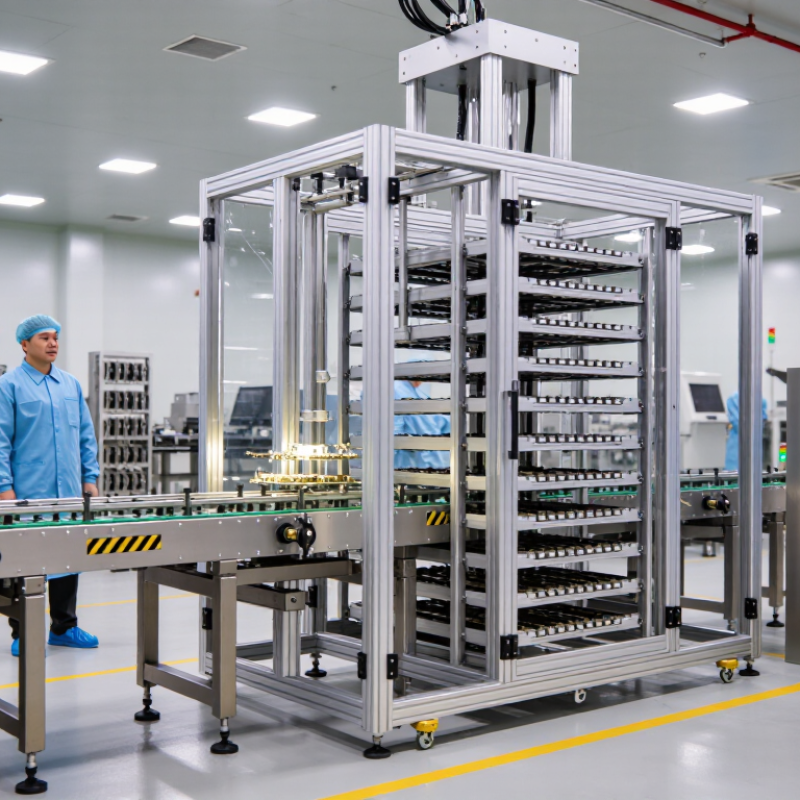
An automatic SMT unloader is equipment that removes assembled printed circuit boards from a production line. It transfers each board into a storage magazine without constant operator handling. In practical terms, it acts as the controlled exit point after inspection, testing, or reflow. Sensors detect board position, while a lifting mechanism aligns the magazine with the conveyor. Small timing errors can still cause stoppages.
Its main role is to protect product flow and reduce unnecessary contact with sensitive assemblies. A well-designed unloader supports stable throughput, repeatable positioning, and safer ESD control. Operators can also monitor magazine capacity, transfer status, and fault alarms from the control panel. During equipment evaluations, I check whether the machine handles different board sizes, weights, and edge conditions. The real test is not only speed. It is consistent movement during long production shifts.
Integration requires careful attention. Conveyor height, board spacing, magazine dimensions, and communication signals must match nearby equipment. A jam sensor is essential, but it cannot replace regular cleaning and inspection. Dust may affect sensors. Worn belts may create uneven transfers. One overlooked issue is changeover time. A machine may perform well, yet waste minutes during every product switch. That detail deserves measurement, not assumption. Some specifications look impressive on paper, but factory results depend on setup quality, maintenance habits, and the actual board mix.
An automatic SMT unloader removes assembled circuit boards from a production line and stores them in magazines. Its work looks simple, but timing and alignment matter greatly. The process begins when a finished board reaches the entry conveyor. Optical sensors detect its position, size, and movement. The conveyor then stops with controlled accuracy.
Next, side clamps hold the board gently. A lifting mechanism raises it from the conveyor surface. The transfer unit moves the board toward an empty magazine slot. Mechanical guides keep the panel level during movement. After reaching the correct height, the board slides into the slot. The magazine advances one position. Sensors confirm successful loading before the next board enters. If alignment fails, the system should pause instead of forcing the panel.
Tips: Check sensor cleanliness every shift. Confirm magazine dimensions before changing products. Keep transfer speed moderate for thin or flexible boards. Record stoppages, even when they seem minor. Small delays often reveal larger setup problems.
A reliable unloader should provide stable indexing, adjustable conveyor width, and clear fault messages. Emergency stops and door interlocks also protect operators and equipment. In practical use, the best machine is not always the fastest. It should match board thickness, production volume, and available floor space. Operators should test real panels, because catalog specifications cannot show every handling issue. A rushed setup may still damage edges or create unstable stacking. That possibility deserves careful review.
What Is the Best Automatic SMT Unloader in 2026?
Key Features to Evaluate in 2026
The best automatic SMT unloader depends on your boards, line layout, and production mix. Check its supported PCB width, length, and thickness against the panels you actually run. Confirm that guides adjust smoothly and hold boards without squeezing their edges. A small gap matters. Test narrow panels, heavier boards, and any unusual cutouts before comparing quoted cycle times.
Look closely at transfer stability and sensor placement. A board should stop squarely, without jolting or catching at the magazine entrance. Ask how the machine detects a full magazine, a missing board, or a jam. Clear alarms save time during a busy shift. Test both. Published throughput can be misleading when changeovers, operator access, and downstream delays are excluded.
Review how recipes are stored and how quickly operators can switch between board sizes. Check whether status signals and production data can connect with your existing line controls. Maintenance access matters too: filters, belts, and sensors should be reachable without awkward disassembly. Even a well-specified machine may need setup adjustments; record them during trials. Run several board types for a full shift, and note stops, handling marks, and operator interventions.
Key features are scored on a 100-point scale using practical 2026 evaluation priorities for automated SMT production lines. Higher scores indicate greater importance when comparing unloader solutions.
The benchmark focuses on measurable production factors such as throughput, PCB compatibility, changeover efficiency, placement repeatability, traceability, safety, and line integration.
What Is the Best Automatic SMT Unloader in 2026?
The best automatic SMT unloader depends on product mix, board dimensions, takt time, and changeover frequency. Magazine unloaders suit stable, high-volume lines with standardized panels. They provide predictable feeding and simple operator control. However, they can slow production when many board sizes require frequent magazine changes. A conveyor-style unloader works better for flexible lines. It handles direct transfer between machines and reduces manual handling. Its limitation is clear: poor alignment can cause board edge damage or stoppages.
Robotic tray and pallet unloaders support mixed-model production. They suit automotive electronics, prototypes, and factories with variable batch sizes. Vision checks can verify board position before transfer. That adds reliability, but also increases integration cost and maintenance demands. The International Federation of Robotics reported 541,302 industrial robots installed worldwide in 2023. This figure shows automation is expanding, but automation alone does not guarantee better output. A badly configured gripper still creates defects quickly.
Buffer-based unloaders are useful when downstream equipment has uneven cycle times. They protect the line from short interruptions and reduce operator intervention. Deloitte and the Manufacturing Institute estimated that 3.8 million manufacturing jobs may be needed in the United States between 2024 and 2033. Labor pressure makes unattended material movement attractive. Still, engineers should validate ESD control, traceability, changeover time, and IPC-A-610 handling requirements. One practical test is a full-shift trial using the smallest and largest boards. The “best” choice may look less impressive after real production data arrives.
There is no single best unloader for every SMT line. The comparison below describes common equipment configurations; board dimensions, magazine capacity, cycle time, and footprint vary by machine design and factory requirements. Confirm specifications with the equipment supplier and your actual PCB mix.
| Unloader Type | How It Handles Boards | Typical Configuration | Best Suited To | Main Advantages | Key Limitations | Integration Considerations | Relative Investment |
|---|---|---|---|---|---|---|---|
| Standard magazine unloader | A conveyor transfers finished boards into a magazine; an elevator indexes the magazine as boards are loaded. | One magazine station; adjustable conveyor width and magazine guides. Board and magazine formats are machine-dependent. | General-purpose SMT lines with stable product runs and routine board unloading. | Simple operating concept; organized batch collection; compatible with common magazine-based material handling. | Magazine changes can interrupt collection unless an operator swaps magazines promptly. Capacity depends on board thickness and slot pitch. | Check conveyor height, transfer direction, board-edge clearance, magazine dimensions, and line-control signaling. | Low to medium |
| Dual-magazine or high-capacity unloader | Loads boards into magazines and provides an additional magazine position or exchange arrangement to extend collection time. | Two magazine positions or a higher-capacity configuration; the exact exchange method varies by design. | Higher-volume lines where reducing magazine-change frequency is important. | Can increase unattended collection time and reduce routine operator interventions. | Uses more floor space and may cost more than a single-magazine unit. Actual uptime benefit depends on the line and operator workflow. | Plan magazine staging, access for operators, safety clearances, and coordination with downstream line controls. | Medium to high |
| Vacuum-pickup unloader | Vacuum cups lift a board from a conveyor and place it into a magazine, rack, or designated output position. | Pickup head with vacuum cups; tooling and cup positions are selected for the board format and surface condition. | Applications needing controlled placement or a transfer method other than direct conveyor loading. | Can handle boards that require a defined lift-and-place movement; pickup positions can be configured for suitable products. | Requires reliable vacuum and appropriate pickup points. Very flexible, thin, warped, or heavily populated boards may need careful validation. | Confirm board stiffness, safe pickup areas, component clearance, vacuum monitoring, and any product-specific tooling needs. | Medium to high |
| Direct conveyor discharge unloader | Transfers boards straight from the upstream conveyor to a downstream process or collection conveyor without magazine stacking. | Inline conveyor section with compatible transfer height, width adjustment, and line-control interface. | Continuous-flow lines where boards proceed directly to another process or a separate collection point. | Supports straightforward inline flow and avoids magazine handling at the discharge point. | Does not provide magazine-based batch storage on its own. The receiving process or collection arrangement must keep pace with production. | Match conveyor direction, transfer speed, board support, and upstream/downstream ready and stop signals. | Low to medium |
| NG or reject-board unloader | Separates boards identified as nonconforming and routes them to a dedicated magazine, rack, or collection area. | Reject-routing logic linked to inspection or line tracking; collection method depends on the selected system. | Lines that need physical separation of failed boards from accepted production. | Helps prevent rejected boards from being mixed with accepted output when routing and tracking are configured correctly. | Requires dependable reject identification and routing logic. It does not replace inspection or quality-control procedures. | Validate board-ID tracking, reject signals, recovery procedures, and the method for handling a full reject magazine. | Medium to high |
| Custom wide-board or heavy-board unloader | Uses an adapted conveyor, supports, and handling arrangement designed around larger, heavier, or otherwise nonstandard boards. | Customized width, support, magazine, or transfer configuration; specifications are project-specific. | Products outside the standard board or magazine format supported by a general-purpose unit. | Can address format or support requirements that standard configurations may not accommodate. | Typically requires more engineering, validation, and space planning; future product changes may require reconfiguration. | Provide maximum and minimum board dimensions, mass, thickness, edge clearance, component height, and required magazine format. | High or project-specific |
How to Choose the Best Automatic SMT Unloader for Your Line
Choosing the best automatic SMT unloader starts with your actual production flow, not a glossy specification sheet. Record board length, width, thickness, weight, and conveyor height across every product family. A machine that handles one panel well may struggle with a thin, flexible board. Measure it twice.
The unloader should match your line’s cycle time, buffer demand, and downstream inspection process. Check transfer accuracy, magazine capacity, changeover time, ESD protection, and safety interlocks. For mixed production, tool-free adjustments can reduce operator errors, but they may increase the purchase cost. That trade-off deserves a real trial. The International Federation of Robotics reported 541,302 industrial robots installed worldwide in 2023, showing how quickly factories are adopting automation. However, automation alone does not guarantee higher output. Poor board support or frequent magazine jams can create hidden downtime.
Ask suppliers for factory acceptance data, not only rated speed. Review uptime records, maintenance intervals, noise levels, and spare-parts availability. IPC standards can help define handling and ESD expectations, while your own production logs should validate throughput claims. A practical test should run your smallest board, largest panel, heaviest magazine, and most difficult changeover. Keep the weak case visible. The best automatic SMT unloader is the one that protects product quality, supports operators, and remains stable during an ordinary, imperfect shift.
A magazine unloader can work well with standardized panels. It offers predictable feeding and straightforward operator control. Frequent size changes may slow the line.
Choose one for flexible lines needing direct board transfer. Check alignment carefully. Poor alignment can damage board edges or stop production.
They can handle varied batches, prototypes, and different board positions. Vision checks add confidence, but increase integration and maintenance demands. Not always worth it.
Record board length, width, thickness, and weight for every product family. Include conveyor height and magazine capacity. Measure twice.
A buffer-based system can absorb short cycle-time differences downstream. It may reduce operator intervention, but its capacity must match actual line needs.
Run the smallest board, largest panel, heaviest magazine, and hardest changeover. Test for a full shift. Real data can be humbling.
Ask for uptime records, maintenance intervals, noise levels, and spare-parts availability. Compare factory acceptance results with your production logs, not just rated speed.
Check transfer accuracy, ESD protection, safety interlocks, and board support. A poorly configured gripper or frequent magazine jams can erase expected gains. Output still needs proof.
Choosing the best Automatic Smt Unloader in 2026 requires understanding its role in modern PCB assembly lines. This equipment automatically receives panels or boards from upstream processes, separates and aligns them when needed, and transfers them smoothly to the next machine. By reducing manual handling, it helps improve throughput, protect sensitive components, maintain consistent workflow, and support safer, more organized production. A typical cycle includes board detection, magazine or conveyor positioning, controlled lifting or pushing, transfer, and confirmation before the next cycle begins.
When evaluating an Automatic Smt Unloader, manufacturers should consider speed, board compatibility, loading capacity, positioning accuracy, changeover convenience, control-system integration, safety functions, maintenance access, and long-term reliability. Different designs may suit compact lines, high-volume production, flexible mixed-model manufacturing, or specialized panel handling. The best choice depends on the line layout, board dimensions, required output, available floor space, and future expansion plans. A careful comparison of machine type, automation level, operating costs, and after-sales support can help create a stable and efficient SMT production process.

Yichun Electronic