China Top Automatic SMT Loader Manufacturers Suppliers?

Time:2026-09-09 Author:Mason
0%

Choosing China’s top Automatic Smt Loader manufacturers and suppliers requires more than comparing catalog prices. A reliable loader should support stable PCB transfer, accurate magazine positioning, and smooth communication with the SMT line. In a working factory, small details matter. The machine must handle real board sizes, changing production batches, and frequent operator adjustments. A clear touchscreen, durable sensors, and accessible spare parts can prevent unnecessary downtime.

Experienced buyers usually examine the supplier’s engineering process, not only its product photos. They ask for layout drawings, cycle-time data, testing records, and installation support. Factory visits or live video demonstrations can reveal assembly quality, wiring standards, and practical maintenance conditions. Certifications such as ISO management records or applicable safety compliance may strengthen confidence, but documents should be verified carefully. They should not replace performance testing.

No supplier is perfect. A polished website may hide limited export experience or slow technical responses. Even a well-built loader can require adjustments after installation. This is where honest communication becomes valuable. Buyers should compare warranty terms, software support, training, and the availability of wear parts. They should also request references from factories using similar PCB volumes and line configurations. The best China Automatic Smt Loader supplier is not always the cheapest option. It is the partner that provides consistent equipment, realistic delivery promises, and accountable after-sales service. Careful evaluation remains essential. Experiences can differ.
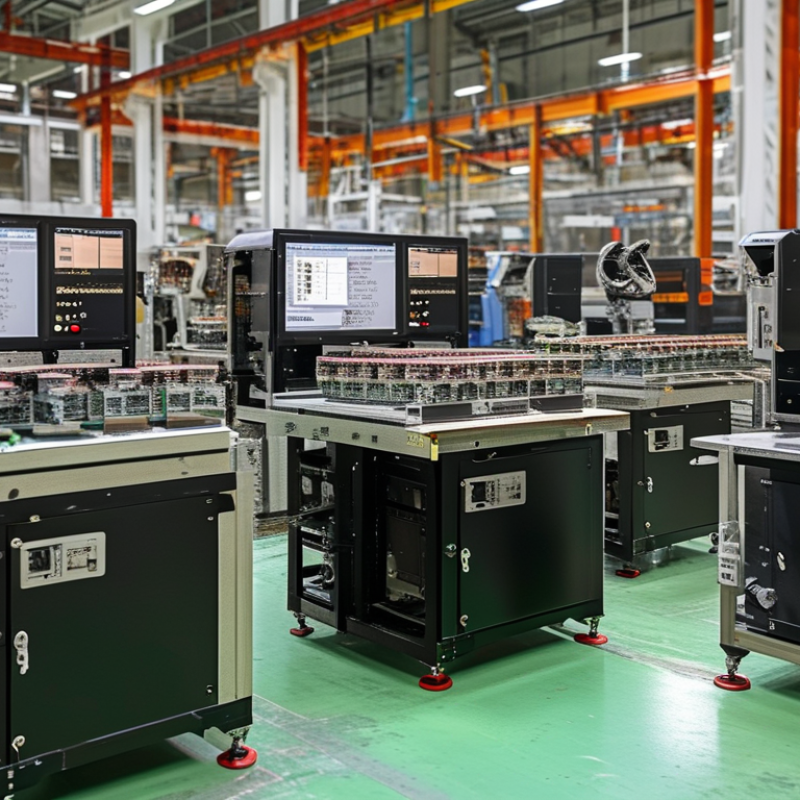
China Top Automatic SMT Loader Manufacturers Suppliers?

SMT Loader Basics: Functions, Types, and IPC-9851 Throughput Metrics

An automatic SMT loader transfers printed circuit boards from magazines to the production line. Its core tasks include board separation, alignment, clamping, and controlled conveyor feeding. A stable loader protects panel edges and reduces manual handling near solder paste. Common types include magazine loaders, unpacking loaders, and buffer loaders. Some systems also support mixed board sizes, which helps during frequent model changes.

IPC-9851 throughput metrics require careful interpretation. Placement speed is often shown in components per hour, while a loader is better judged by boards per hour, transfer time, and line availability. Measure the complete cycle, including magazine exchange, board spacing, conveyor communication, and stoppage recovery. Theoretical speed can look impressive. Real output may fall when thin boards bend or operators reload magazines slowly. In my experience, a two-second transfer gain matters only when the placement machine and downstream equipment can match it. This is easy to overlook.

Tips: Record actual output during a full shift, not during a short trial. Check board thickness, magazine capacity, sensor response, and changeover time. Ask suppliers for repeatability data and documented test conditions. IPC-9851 figures should support comparison, but they should not replace a line trial. A small buffer may improve flow, although it can also hide recurring faults. Review both numbers and maintenance experience before selecting an automatic SMT loader.

China’s SMT Loader Market: Key Manufacturers, Supplier Profiles, and Scale

China’s SMT loader market is expanding with factory automation and tighter production planning. SEMI’s 2024 World Fab Forecast projected global semiconductor equipment spending near 110 billion US dollars for 2025. That investment supports demand for connected loading systems, although the report does not separate SMT loaders.

Chinese manufacturers and suppliers typically serve three scale levels: compact units for flexible lines, standard loaders for medium factories, and customized systems for high-volume plants.

Buyers should examine magazine capacity, board-size range, changeover time, interface compatibility, and feeder protection.

In real production, a two-minute loading delay can disturb an entire placement line. IPC’s 2024 electronics industry outlook also highlights labor pressure and manufacturing cost concerns, making stable automation increasingly valuable. However, supplier data is not always comparable. Some companies report shipment volume, while others report installed machines.

Tips:

Request a live acceptance test. Measure loading accuracy, cycle time, alarm handling, and recovery after a simulated jam. Ask for service response times and spare-parts coverage in China. A low purchase price may hide integration work. It happens. Review at least three technical offers, and verify references from factories using similar board sizes and production volumes. Forecasts can be useful, but actual line performance deserves more weight.

How to Compare Loaders by 8–15 Seconds per PCB Changeover

China Top Automatic SMT Loader Manufacturers Suppliers?

An automatic SMT loader should be judged by measured changeover time, not brochure speed. During a factory trial, record the interval from the last accepted PCB to the first stable PCB. The 8–15 second target is meaningful only when operators avoid manual alignment, repeated resets, and empty conveyor gaps. Shorter is better.

IPC industry surveys consistently identify productivity, downtime, and process stability as major electronics manufacturing concerns. ISO 22400 also treats availability and performance as separate OEE factors. Therefore, compare loaders using three numbers: actual changeover seconds, first-pass yield, and recovery time after a fault. Ask suppliers to test your smallest and largest board sizes. A loader may reach 9 seconds on one format, then require 18 seconds after a width adjustment.

Check magazine capacity, sensor accuracy, conveyor height range, and recipe recall. A useful test uses ten consecutive changes. Record every result, including the slowest cycle. Eight seconds once proves little. Ten stable cycles prove more. Look for guided rails, automatic width adjustment, and clear alarm messages. These details reduce operator hesitation.

Some reports forecast continued growth in SMT equipment investment, but market growth does not guarantee better line performance. That is an easy mistake. Calculate annual savings from every recovered second, then subtract maintenance and training costs. A low purchase price can hide repeated micro-stoppages. Use real boards, real magazines, and normal operators during acceptance testing. Their feedback may challenge the supplier’s best demonstration.

China Top Automatic SMT Loader Manufacturers Suppliers? – How to Compare Loaders by 8–15 Seconds per PCB Changeover
Loader Configuration Typical Magazine Changeover Recommended PCB Size PCB Thickness Magazine Capacity Magazine Width Adjustment Transfer Height Conveyor Speed Best-Fit Production Scenario Key Verification Point
Compact automatic loader 12–15 seconds 50–460 mm wide
50–460 mm long
0.4–4.0 mm Up to 30 standard magazines Manual or motorized adjustment Typically 900–950 mm Adjustable, commonly up to 20 m/min SMT lines with moderate product variety and limited floor space Confirm that the quoted cycle includes magazine positioning, PCB transfer, and return to ready status.
Standard high-throughput loader 10–12 seconds 50–530 mm wide
50–460 mm long
0.4–4.0 mm Up to 40 standard magazines Motorized adjustment with stored recipes Typically 900–950 mm Adjustable, commonly up to 20 m/min Two-shift or three-shift production with frequent magazine replenishment Check whether the cycle time remains stable at maximum magazine load and minimum PCB spacing.
Fast changeover loader 8–10 seconds 50–530 mm wide
50–460 mm long
0.4–4.0 mm Up to 40 standard magazines Servo-driven adjustment with recipe recall Typically 900–950 mm Adjustable, commonly up to 20 m/min High-mix lines where lost seconds accumulate across many product changes Request a witnessed test using the buyer’s actual magazine, PCB weight, stack height, and line interface.
Flexible wide-board loader 12–15 seconds 50–610 mm wide
50–460 mm long
0.4–4.0 mm Up to 30 standard magazines Motorized adjustment with broad-width support Typically 900–950 mm Adjustable, commonly up to 20 m/min Large-panel, LED, automotive, and mixed-format PCB production Verify guide rigidity, panel support, edge clearance, and transfer reliability at the maximum board width.
Heavy-PCB reinforced loader 12–15 seconds 50–530 mm wide
50–460 mm long
0.8–6.0 mm Up to 30 standard magazines Motorized adjustment with reinforced rails Typically 900–950 mm Adjustable, commonly up to 15 m/min Thick copper, aluminum-backed, or mechanically heavy boards Confirm maximum board mass, rail load, acceleration profile, and whether support pins are included.
Comparison basis: The specifications above are representative engineering ranges used for preliminary SMT loader selection, not data attributed to any specific company or brand. Actual performance depends on PCB dimensions, magazine type, board weight, line height, conveyor configuration, sensor logic, and factory acceptance-test conditions. A valid 8–15 second comparison should use the same PCB, magazine, loading quantity, and cycle-time definition for every supplier.

Technical Standards: PCB Sizes, 01005 Support, ESD, and SMEMA Interfaces

China Top Automatic SMT Loader Manufacturers Suppliers?

Automatic SMT loaders must match the real PCB range, not only catalog figures. Confirm board length, width, thickness, edge clearance, and loading direction. IPC-2221C gives design guidance, but it does not create one universal PCB size. For 01005 components, the package measures about 0.4 × 0.2 mm. Such small parts demand stable transfer, low vibration, accurate centering, and controlled acceleration. A loader should also support clean handoff to the printer or placement line.

ESD control is essential. ANSI/ESD S20.20 provides a recognized framework for managing electrostatic risks across equipment, operators, and work areas. Ask suppliers for grounding tests, antistatic material details, and maintenance records. SMEMA 1.2 compatibility is equally important. Check signal definitions, connector placement, conveyor height, and fault communication. WSTS reported 16.0% global semiconductor sales growth in 2024, followed by a forecasted 12.5% increase in 2025. Higher production volume makes interface downtime more expensive. However, capacity claims can be optimistic. No loader is perfect on day one.

Tips: Request a sample run using your narrowest PCB and an 01005 panel. Measure transfer time, stoppages, ESD resistance, and SMEMA signal response. Review IPC-based inspection records, not only brochures. A short factory acceptance test may reveal alignment drift that a specification sheet misses.

Supplier Selection: Warranty, Certifications, Delivery, Service, and ROI Data

China Top Automatic SMT Loader Manufacturers Suppliers?

Selecting an automatic SMT loader requires more than comparing prices. Ask for a written warranty covering motors, sensors, control boards, and labor. Two years is stronger than twelve months, but exclusions matter more. Request ISO 9001 certification and verify its certificate number through the issuing body. The ISO Survey 2023 recorded more than 1.2 million ISO 9001 certificates worldwide, yet certification alone does not prove stable assembly quality. Ask for factory acceptance-test records, calibration dates, and sample traceability.

Delivery promises should include production time, shipping terms, spare-part availability, and installation support. Deloitte’s 2023 Smart Manufacturing and Operations Survey found that 86% of manufacturing leaders expect smart manufacturing to become a major competitiveness driver within five years. That makes service capability important. Request remote diagnosis, response-time targets, training hours, and local technical coverage. I would also inspect one operating machine, not only polished videos. A clean showroom can hide slow changeovers.

Tips: Build a three-year ROI sheet. Include loader price, installation, rejected boards, labor minutes saved, downtime, energy use, and spare parts. Measure payback with real shift data. For example, saving one operator per shift may look attractive, but lower throughput can erase the gain. Ask for customer references using similar board sizes and conveyor widths. Do not accept vague “high efficiency” claims. Require cycle-time data, fault logs, and a demonstration with your trays. My own selection mistakes usually came from trusting promised delivery dates too quickly. Require penalties or written remedies.

China Automatic SMT Loader Supplier Selection: Practical Benchmark Targets

Key procurement benchmarks for evaluating warranty, certifications, delivery, service response, and return on investment.

These non-brand benchmarks reflect commonly specified purchasing targets for industrial SMT automation equipment: at least 12 months of warranty coverage, four core compliance documents, delivery within 45 days, technical response within 24 hours, and an ROI payback target of 24 months or less. Actual terms should be verified in the supplier quotation and contract.

FAQS

: What does an automatic SMT loader do?

: It transfers circuit boards from magazines to the production line. It separates, aligns, clamps, and feeds each board at a controlled speed. This reduces manual handling near solder paste.

Which loader types are commonly used?

Common types include magazine loaders, unpacking loaders, and buffer loaders. Some models handle mixed board sizes. That helps during frequent product changes.

How should loader throughput be measured?

Measure boards per hour, transfer time, and line availability. Include magazine exchange, board spacing, conveyor signals, and jam recovery. Component placement speed alone is not enough.

Can a fast transfer time guarantee higher production?

No. The placement machine and downstream equipment must match the loader’s speed. Thin boards may bend and reduce actual output. Slow magazine reloading can create another delay.

Which PCB details must be checked before purchase?

Confirm board length, width, thickness, edge clearance, and loading direction. Test the narrowest board in your product range. Catalog limits may not reflect stable production performance.

What matters when handling very small components?

Stable transfer, low vibration, accurate centering, and controlled acceleration are important. A practical test should use a small-component panel. Tiny parts expose alignment problems quickly.

How should ESD and conveyor communication be verified?

Request grounding tests, antistatic material details, and maintenance records. Check signal definitions, connector positions, conveyor height, and fault communication. A brief test can reveal hidden interface problems.

What should a supplier acceptance test include?

Measure loading accuracy, cycle time, alarm handling, and jam recovery. Test magazine capacity and changeover time. Ask for service response times and spare-parts coverage.

Is a small buffer always helpful?

Not always. A buffer can smooth short interruptions and protect line flow. It may also hide repeated faults. Review maintenance records, not only output numbers.

How can buyers compare different suppliers fairly?

Request live tests under identical conditions. Compare at least three technical offers and similar factory references. Check actual full-shift output. Forecasts look useful, but production evidence matters more.

Conclusion

This guide explains how an Automatic Smt Loader improves PCB production by transferring boards from magazines to the SMT line with stable positioning, controlled handling, and reduced manual intervention. It covers loader functions, common configurations, and key performance indicators, including IPC-9851-oriented throughput evaluation and PCB changeover times of approximately 8–15 seconds. Readers will also learn how to compare equipment based on board dimensions, 01005 component support, ESD protection, SMEMA compatibility, safety features, and integration with upstream and downstream machines.

The article also reviews China’s SMT loader market from a supplier-selection perspective, focusing on manufacturing capacity, customization, quality control, and service resources rather than specific company names. Practical purchasing guidance includes evaluating warranty terms, certifications, delivery schedules, spare-parts availability, technical support, installation training, and measurable return on investment. By combining technical standards with production data and lifecycle costs, manufacturers can select a reliable loader that supports consistent throughput, flexible product changeovers, and long-term line efficiency.


Mason

Mason

Mason is a seasoned marketing professional with a deep expertise in the company's offerings and a passion for driving brand awareness. With a strong background in digital marketing strategies, he has an innate ability to connect with diverse audiences and effectively communicate product benefits.......