China Top Small Wave Soldering Machine Supplier

Time:2026-10-17 Author:Madeline
0%

Choosing a China Top Small Wave Soldering Machine Supplier requires more than comparing prices and glossy product photos. Buyers should examine practical experience, process control, machine stability, and long-term technical support. A reliable supplier understands how compact assemblies behave near solder pots, conveyors, preheating zones, and fluxing systems.

Ray Prasad, a respected SMT author and soldering specialist, offers a useful reminder: “SMT soldering is both an art and a science.” This principle also applies to a Small Wave Soldering Machine. A stable machine must maintain consistent solder temperature, controlled wave height, accurate conveyor speed, and suitable contact time. Small differences can create bridges, icicles, insufficient fill, or overheated components. These problems often appear under real production pressure, not during a short showroom demonstration.

The strongest Chinese suppliers usually provide process trials, thermal profiling, maintenance guidance, spare-parts access, and documented quality procedures. Buyers should ask for test reports and inspect actual factory assembly areas. A machine may look compact and efficient, yet its flux control or exhaust design may disappoint after installation. That possibility deserves honest attention. No supplier is perfect. Even experienced teams can miss a detail during evaluation. Careful sampling, reference checks, and clear acceptance standards reduce that risk. This guide explores how to identify a dependable Small Wave Soldering Machine supplier in China, while recognizing that machine performance depends on equipment, materials, operators, and disciplined process management.
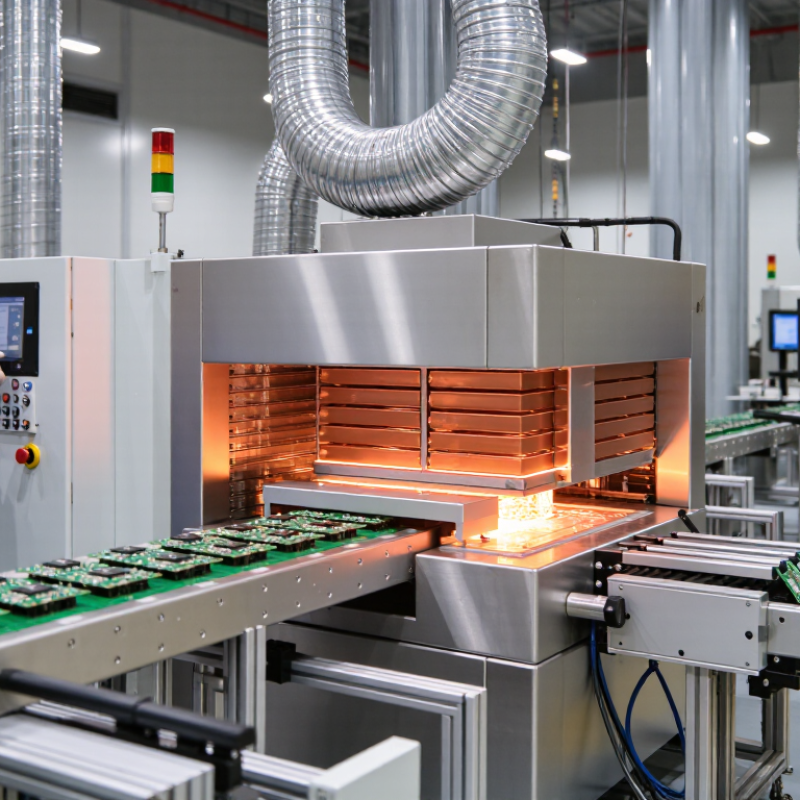
China Top Small Wave Soldering Machine Supplier

What Is a Small Wave Soldering Machine?

A small wave soldering machine is a compact system for soldering through-hole components on printed circuit boards. It moves each board across controlled fluxing, preheating, and molten solder stages. A pump creates a steady solder wave beneath the board. Heated solder then fills component leads and plated holes quickly.

Its main sections include a conveyor, flux unit, preheater, solder pot, and cooling area. Some machines use dual waves for better results on mixed component layouts. “Small” usually describes the footprint and working width. It does not automatically mean low capability. In production practice, this equipment suits prototypes, repair departments, and small-batch assembly. The Global E-waste Monitor 2024 reported 62 million tonnes of electronic waste in 2022. It projects 82 million tonnes by 2030. Stable soldering can reduce rejected boards, solder waste, and repeated rework.

A buyer should check conveyor width, heating zones, solder capacity, nitrogen compatibility, and temperature control. IPC-A-610 workmanship criteria can help define acceptable solder joints. However, standards cannot replace process trials. A compact machine may struggle with heavy copper boards or uneven thermal loads. That limitation matters. Operators still need correct flux quantity, preheat settings, and board support. A common mistake is selecting by machine size alone. Actual throughput, maintenance access, and fume control deserve equal attention. Overselling simplicity would be misleading. Good results depend on the complete process, not the wave alone.

How Small Wave Soldering Machines Work

Small wave soldering machines move circuit boards through a controlled sequence. A conveyor first carries the board across a fluxing zone. Preheaters then raise the board temperature gradually. This reduces thermal shock and improves solder flow. The board finally meets a molten solder wave created by a pump and shaped nozzle. The wave touches exposed through-hole leads beneath the board. Surface tension pulls solder into plated holes and forms reliable joints.

Machine performance depends on temperature, conveyor speed, wave height, and contact time. Operators usually monitor solder temperature near 250°C for lead-free processing, while exact settings depend on the alloy and board design. A 2024 industry analysis by Fortune Business Insights reported continued growth in global soldering equipment demand, driven by electronics production and automation. IPC standards also stress process control, cleanliness, and joint inspection rather than appearance alone.

Small machines suit prototypes, low-volume assembly, and mixed production lines. Their shorter solder paths can reduce material waste and simplify adjustment. However, compact does not mean effortless. Poor flux coverage may cause incomplete filling. Excessive wave height can create bridges between closely spaced pins. Experienced technicians record profiles with thermocouples and inspect cross-sections when defects repeat. The numbers help, but they do not replace judgment. Even a stable machine may need different settings after a board layout changes.

How Small Wave Soldering Machines Work

This representative lead-free soldering profile shows how a PCB is gradually preheated, reaches the solder wave, and then cools after solder contact. The solder wave is typically maintained near 250–270°C, while the PCB surface is commonly exposed to the wave for only a few seconds to form reliable through-hole joints.

Key Features of a Reliable Machine Supplier

China Top Small Wave Soldering Machine Supplier

A reliable small wave soldering machine supplier should prove performance beyond a polished brochure. IPC industry surveys consistently identify quality, delivery stability, and skilled support as major electronics manufacturing concerns. These points matter when a solder pot runs for eight hours beside a busy assembly line.

Look for documented temperature uniformity, stable conveyor speed, and adjustable flux control. A practical supplier should provide process records, calibration certificates, and sample boards from comparable applications. In my production experience, a clear test report is more valuable than a bold efficiency claim. Ask for soldering results on connectors, through-hole components, and heat-sensitive boards. Real evidence matters.

Service capability is equally important. A 2024 electronics manufacturing outlook from IPC reported continued pressure from labor shortages and supply-chain uncertainty. Suppliers should therefore offer remote troubleshooting, spare-part availability, installation training, and clear response times. Short delays can stop an entire line.

Very costly.

Do not ignore factory communication during evaluation. Slow replies often predict slow support after payment. Still, no supplier is flawless. Even a well-built machine may need conveyor adjustment, nozzle cleaning, or parameter correction after installation. A dependable supplier admits these limits and explains the maintenance routine plainly.

How to Evaluate Machine Quality and Specifications

China Top Small Wave Soldering Machine Supplier

How to Evaluate Machine Quality and Specifications

Choosing a small wave soldering machine requires more than comparing prices. Inspect the machine’s structure, solder pot, preheater, conveyor, and control system. Stainless steel parts should resist corrosion and remain easy to clean. Ask for temperature stability records, not only display screenshots. A reliable machine should maintain consistent solder temperatures during repeated production cycles. Check the conveyor width, PCB thickness range, board clearance, and adjustable wave height. These specifications must match your actual assemblies. A compact machine may save floor space, but limited capacity can slow production.

Tips: Request a live test using your own circuit boards. Observe solder coverage, bridging, residue, and recovery time after loading several boards. Measure preheating performance at different conveyor speeds. Ask how often pumps, heaters, nozzles, and sensors require maintenance. Confirm electrical documentation, safety protection, spare-part availability, and service response procedures. Compliance should be verified against applicable local requirements.

From practical evaluations, I have found that smooth operation matters as much as maximum output. Excessive vibration can affect wave consistency. Poor access around the solder pot can turn routine cleaning into a difficult task. A polished brochure proves little. Ask for inspection reports, calibration records, sample results, and operator training details. My checklist is not perfect; real boards may reveal problems during long shifts. Leave room for trial production, because advertised specifications sometimes differ from factory conditions.

Applications, Maintenance, and Supplier Support

China Top Small Wave Soldering Machine Supplier

Small wave soldering machines suit compact through-hole assemblies, control boards, and low-volume production. Their narrow solder wave reduces material use and limits heat exposure around nearby components. In mixed production, operators can adjust conveyor speed, preheating, and solder height for different board designs. I have seen stable results on connectors, terminal blocks, and small power modules. However, board spacing and flux selection still influence joint quality more than machine size.

Maintenance must be practical and recorded. Clean the nozzle and solder pot regularly, especially after long runs with active flux. Check conveyor rails, pump performance, thermocouples, and exhaust flow during scheduled inspections. A blocked nozzle can create uneven coverage within minutes. The first maintenance plan we tested was too optimistic. Flux residue built up faster than expected. Daily visual checks proved more useful than relying only on monthly servicing.

Reliable supplier support should include installation guidance, operating parameters, spare-part availability, and remote troubleshooting. Ask for training that covers wave height measurement, temperature profiling, and defect diagnosis. Clear manuals matter, but responsive technical staff matter more during production delays. Suppliers should provide realistic delivery times and explain which parts need local stocking. Request sample soldering trials before purchase. Actual boards reveal problems that a demonstration panel may hide. Support quality often determines whether a capable machine remains productive after installation.

China Top Small Wave Soldering Machine Supplier - Applications, Maintenance, and Supplier Support
Category Parameter Typical Data or Range Application, Maintenance, or Supplier Support Value
Small Wave Soldering Machine Reference Data
Machine Configuration Equipment format Compact inline or batch-operated wave soldering system Suitable for prototype production, laboratory use, repair departments, and small-to-medium production batches.
Machine Configuration Effective PCB width Approximately 50–400 mm, depending on conveyor design The working width should match the largest PCB and allow sufficient edge clearance for stable transport.
Machine Configuration Conveyor speed Approximately 0.5–2.0 m/min Lower speeds increase thermal exposure and solder contact time; higher speeds can improve throughput when the PCB profile allows it.
Thermal Process Preheating temperature Commonly about 80–130°C at the PCB surface Preheating reduces thermal shock, improves flux activation, and supports more consistent hole fill.
Thermal Process Solder pot temperature Lead-free alloys: commonly 250–275°C; tin-lead alloys: commonly 235–255°C The correct setting depends on alloy composition, PCB finish, component limits, conveyor speed, and process requirements.
Soldering Process Wave contact time Often approximately 2–5 seconds Contact time affects solder penetration, bridging risk, component heating, and the final solder joint appearance.
Soldering Process Common solder alloys Lead-free SAC-type alloys and tin-lead alloys where legally permitted The solder pot, pump, nozzle, and temperature profile should be compatible with the selected alloy and applicable regulations.
Flux System Flux application methods Spray fluxing or foam fluxing, depending on machine design Flux quantity and distribution should be adjusted to the PCB surface, flux type, and solderability requirements.
Capacity Practical output Typically several dozen to several hundred boards per hour Actual output depends on PCB length, conveyor speed, loading method, cooling time, changeover frequency, and inspection requirements.
Utilities Typical requirements Electrical power, compressed air for selected systems, ventilation, and solder fume extraction Utility planning should be completed before installation to support safe operation and stable process conditions.
Typical Applications
Electronics Assembly Through-hole PCB assembly Connectors, terminals, relays, transformers, switches, and other through-hole components Wave soldering is efficient for soldering multiple through-hole joints in a single controlled pass.
Industrial Electronics Control boards and power modules Industrial controllers, power supplies, motor-control boards, and interface assemblies The process can provide repeatable solder joints when thermal mass and component clearance are properly profiled.
Consumer Electronics Small-batch electronic products Audio equipment, household control boards, lighting controls, and embedded devices Compact equipment helps manufacturers handle varied product models without the footprint of a large production line.
Automotive Electronics Selected low-to-medium volume assemblies Harness interface boards, control interfaces, and specialized electronic modules Process validation, traceability, thermal profiling, and solder-joint inspection are essential for automotive-related products.
Repair and Rework Service and refurbishment operations Replacement of through-hole components and batch rework of assembled PCBs A compact system can be useful where production volumes are variable and flexible setup is more important than maximum speed.
Maintenance Schedule
Daily Maintenance Solder pot and wave area Remove dross, check solder level, inspect wave stability, and clean accessible residues Daily checks help reduce bridging, insufficient fill, oxidation-related defects, and unstable solder flow.
Daily Maintenance Flux system Inspect flux level, spray pattern or foam generation, and nozzle condition Incorrect flux delivery can cause poor wetting, solder balls, residue, and inconsistent joint quality.
Weekly Maintenance Conveyor and fingers Clean conveyor rails, fingers, fixtures, and contact surfaces; check alignment and movement Clean and correctly aligned transport components help prevent PCB instability, scratches, and transfer interruptions.
Weekly Maintenance Pumps and nozzles Inspect pump performance, wave nozzles, impellers, and solder flow passages Removing buildup supports a uniform wave profile and reduces the risk of intermittent soldering defects.
Monthly Maintenance Temperature verification Compare displayed temperatures with calibrated measurement equipment Verification helps detect sensor drift and confirms that preheat and solder-pot conditions remain within process limits.
Monthly Maintenance Electrical and pneumatic inspection Check cables, heaters, sensors, fans, air lines, regulators, and safety interlocks Preventive inspection reduces unplanned downtime and identifies safety or reliability issues before failure.
Periodic Maintenance Solder alloy analysis Check alloy composition and contamination according to process-control requirements Copper dissolution and contamination can change solderability, joint appearance, and process consistency over time.
Supplier Support Evaluation Criteria
Technical Support Installation and commissioning Layout review, utility confirmation, machine setup, trial run, and acceptance testing A documented commissioning process helps confirm that the equipment meets agreed operating and safety requirements.
Technical Support Process training Operator training covering startup, profile adjustment, cleaning, fault handling, and shutdown Proper training improves operator safety, reduces setup errors, and supports repeatable soldering results.
Documentation Technical documents Operating manual, electrical drawings, spare-parts list, maintenance schedule, and troubleshooting guide Complete documentation simplifies maintenance, staff training, audits, and future troubleshooting.
Spare Parts Recommended inventory Heaters, thermocouples, pump components, nozzles, filters, fuses, belts, and conveyor fingers Keeping critical wear parts available can shorten repair time and reduce production interruptions.
Remote Service Troubleshooting assistance Video support, operating-data review, fault-code analysis, and parameter guidance Remote assistance is useful for resolving common setup and control issues without waiting for an on-site visit.
Warranty and Service After-sales response Defined response channel, replacement-part procedure, service records, and escalation process Clear service terms improve accountability and help users plan repairs, maintenance, and production continuity.
Quality Support Process validation assistance PCB trial runs, thermal profiling, solder-joint inspection, and parameter recommendations Validation support helps match the machine to actual PCB geometry, component mix, flux, alloy, and production targets.
Note: The specifications shown are industry-typical reference ranges for compact wave soldering systems. Actual values depend on machine configuration, PCB design, solder alloy, flux, production conditions, and applicable safety requirements.

FAQS

What is a small wave soldering machine?

It is a compact system for soldering through-hole components onto printed circuit boards. Boards move through fluxing, preheating, molten solder, and cooling stages. A pump forms a steady solder wave beneath each board.

Which boards suit this machine?

It suits prototypes, repair departments, control boards, and small-batch production. Common examples include connectors, terminal blocks, and small power modules. Real boards differ.

Does a small machine have limited capability?

Not necessarily. “Small” usually describes the footprint and working width. However, heavy copper boards may heat unevenly inside compact equipment. That limitation deserves careful testing.

What features should buyers compare?

Compare conveyor width, heating zones, solder capacity, temperature control, and nitrogen compatibility. Check maintenance access and exhaust arrangements. Machine size alone is an unreliable buying guide.

How can operators improve soldering quality?

Set flux quantity, preheat temperature, conveyor speed, and solder height for each board design. Use thermal profiling during setup. A stable process matters more than the wave alone.

What maintenance does the machine require?

Clean the nozzle and solder pot regularly, especially after long runs with active flux. Inspect conveyor rails, pump performance, thermocouples, and exhaust flow. Keep records.

What problems can appear during operation?

A blocked nozzle can cause uneven solder coverage within minutes. Flux residue may build faster than expected. Daily visual checks can reveal issues before scheduled servicing.

What support should a supplier provide?

Support should include installation guidance, operating parameters, spare parts, training, and remote troubleshooting. Request help with wave height measurement and defect diagnosis. Ask for sample trials using actual boards. Demonstration panels can hide real production problems.

Conclusion

A Small Wave Soldering Machine is a compact, efficient system designed to solder through-hole electronic components by passing assembled circuit boards over a controlled wave of molten solder. It is especially suitable for small and medium production lines, prototype manufacturing, and applications where space, flexibility, and cost efficiency are important. A reliable machine supplier should provide stable temperature control, precise conveyor movement, consistent solder wave performance, durable construction, and user-friendly operation.

When evaluating equipment quality, buyers should review soldering capacity, heating efficiency, conveyor accuracy, power requirements, safety features, and compatibility with different board sizes and materials. Proper maintenance, including regular cleaning, inspection, calibration, and solder management, helps ensure long-term performance and reliable results. Strong supplier support is also essential, including installation guidance, operator training, spare parts availability, troubleshooting assistance, and responsive after-sales service. Choosing the right supplier ensures dependable production, reduced downtime, and consistent soldering quality.


Madeline

Madeline

Madeline is a dedicated marketing professional with a wealth of expertise in our company's core offerings. With a keen understanding of the industry, she brings a unique perspective to her role, consistently delivering high-quality content that highlights the superior aspects of our products. As......