China’s PCB manufacturing base is expanding from high-volume assembly toward smarter, more traceable production. Fortune Business Insights valued the global printed circuit board market at approximately USD 87.6 billion in 2023. Its report projects continued growth through 2032, driven by automotive electronics, industrial controls, telecommunications, and consumer devices. This growth creates pressure on factories to reduce manual handling between storage racks, conveyors, and surface-mount lines.
An Automatic Pcb Loader is a small machine with a large operational effect. It can align bare boards, control transfer speed, and reduce scratches caused by hurried manual loading. IPC research on electronics manufacturing repeatedly emphasizes productivity, quality consistency, and workforce capability as connected priorities. These priorities matter when a production line runs continuously, with boards entering at regular intervals and only seconds available for each transfer. Michael Ford, a recognized manufacturing-automation specialist at Aegis Software, has stated, “Automation is not about replacing people; it is about enabling people to do more.” That principle remains useful when evaluating China’s top manufacturers.
However, supplier rankings should not rely on catalogue claims alone. That would be too easy. Buyers should examine loader accuracy, magazine compatibility, changeover time, ESD protection, software communication, spare-parts access, and service records. A polished demonstration may hide difficult maintenance. The following selection considers engineering experience, production references, customization ability, export support, and evidence of stable performance. It also recognizes an uncomfortable point: the lowest purchase price may become expensive when downtime, rejected boards, or delayed technical support enter the calculation.
What Is an Automatic PCB Loader and How Does It Work?
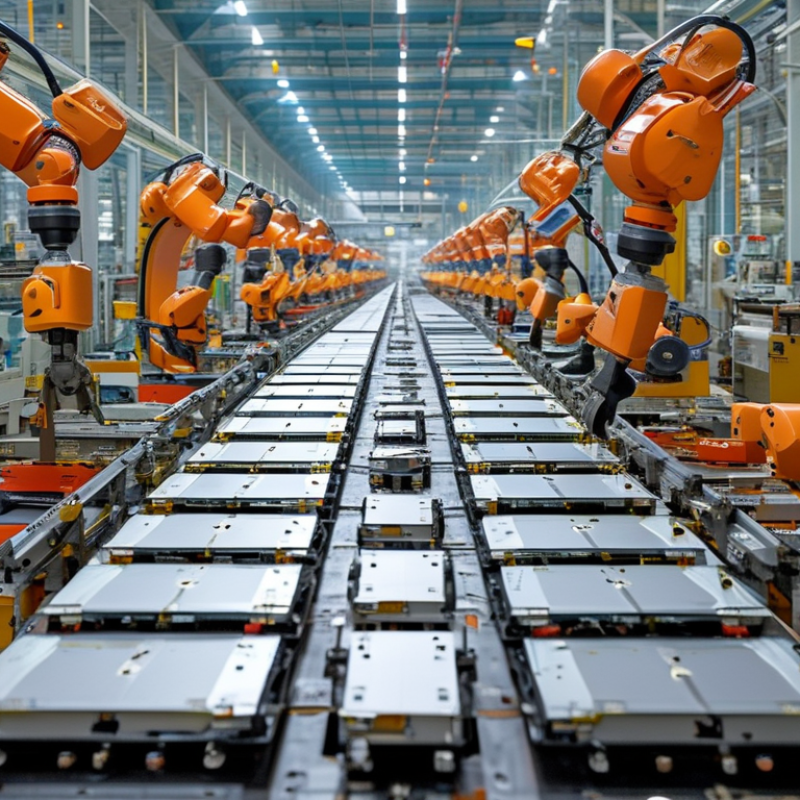
An automatic PCB loader transfers bare circuit boards into an SMT production line. It replaces manual loading at the line entrance. A magazine stores stacked boards, while a lifting mechanism positions each board at conveyor height. Sensors check board presence, thickness, and direction. A pusher then moves the board onto the conveyor.
Its control system connects with the upstream machine through standard signals. When the line is ready, the loader releases one board. A spacing sensor prevents double feeding. If a board tilts, jams, or arrives late, the system stops and sends an alarm.
In real factories, dust, warped boards, and uneven magazine slots can still cause failures. The machine is automatic, but not careless-proof.
IPC’s 2024 electronics manufacturing outlook describes continuing pressure for higher productivity and stable quality across global production. SEMI’s World Fab Forecast also tracks sustained investment in semiconductor and electronics capacity, which supports demand for connected factory equipment. These reports do not measure loaders alone, so market-specific claims need caution.
A practical evaluation should examine cycle time, board-size range, magazine capacity, changeover time, and communication compatibility. A loader that saves labor but frequently misaligns boards is not efficient.
That lesson is easy to miss.
How to Evaluate China’s Top Automatic PCB Loader Manufacturers
China Top 10 Automatic PCB Loader Manufacturers?
Evaluating China’s top automatic PCB loader manufacturers requires more than comparing prices. Check how each supplier handles your actual board sizes, weights, and production speed. Request a live test with sample panels. Observe loading accuracy, conveyor stability, and transfer time. A reliable machine should position boards smoothly without scratching edges or disturbing components. Ask for cycle-time records, not only catalog figures.
Inspect the loader’s mechanical structure and control system closely. Stainless steel surfaces, accessible sensors, and clear alarms support easier maintenance. Confirm ESD protection, safety guarding, and compatibility with your existing SMT line. Review electrical documents, spare-part lists, and software backup procedures. These details often reveal the manufacturer’s engineering discipline. A factory should also explain its inspection process, operator training, and after-sales response time.
Do not rely on a polished showroom. It can hide weaknesses. Visit a working production site when possible, or request an unedited factory acceptance test. Speak with engineers, not only sales staff. Compare warranty terms with actual service coverage and local support options. No supplier is perfect, and your first scorecard may be incomplete. Recheck noise levels, board jams, and recovery steps after a fault. Small delays become expensive during long shifts. A trustworthy manufacturer answers technical questions directly, documents limitations, and accepts reasonable design changes without making unrealistic promises.
Top 10 Chinese Automatic PCB Loader Manufacturers by Key Strengths
China’s top ten automatic PCB loader manufacturers are better judged by strengths than slogans. Prismark’s 2024 PCB Industry Forecast placed China at roughly 53% of global PCB production value in 2023. That scale supports strong automation supply chains and faster customization.
The leading ten manufacturers usually divide their advantages clearly. One focuses on high-speed magazine transfer. Another excels in compact loaders for crowded SMT lines. A third offers stable vacuum handling for thin boards. Others compete through servo precision, low-noise operation, quick changeovers, or smart factory connectivity. Some provide strong after-sales support across export markets. Others win through lower entry costs and flexible engineering. Energy-efficient designs are becoming more important as factories monitor operating costs. IPC’s 2024 electronics manufacturing research also identified labor shortages and production efficiency as continuing industry concerns. Speed is not everything. A fast loader still fails if alignment drifts after long shifts.
Tips: During a factory audit, test at least three PCB sizes. Check magazine change time, sensor accuracy, emergency stops, and recovery after a jam. Request real production records, not only laboratory demonstrations. Confirm software compatibility with your existing line. A small weakness in interface design can create repeated manual work. No ranking is flawless; actual performance depends on board thickness, line layout, operator training, and maintenance discipline.
What Features and Specifications Should Buyers Compare?
When comparing automatic PCB loader manufacturers, buyers should examine machine fit, not only advertised speed. I have seen fast loaders struggle with thin boards, warped panels, and mixed production orders. Check the supported PCB length, width, thickness, and maximum panel weight. A useful range should match both current products and likely future designs. Confirm whether the machine handles single boards, panels, or special carriers. Small details matter.
Compare loading capacity in boards per minute, but ask how that figure was measured. A cycle test with empty magazines may not reflect factory performance. Review magazine dimensions, magazine capacity, changeover time, and conveyor height. Adjustable rails should protect board edges without adding excessive setup work. Servo-driven movement usually improves positioning control, while sensors should detect jams, missing boards, and incorrect orientation. Ask for documented accuracy and repeatability data.
Communication options deserve equal attention. Common industrial interfaces can simplify connection with printers, conveyors, and production tracking systems. Verify electrical requirements, air pressure, noise levels, and floor space before purchase. Maintenance access should allow operators to reach belts, sensors, and guides without dismantling the frame. Request installation records, training details, spare-part availability, and response times. I once focused too heavily on throughput and underestimated changeover delays. That mistake showed me that practical uptime matters more than a perfect brochure number. During acceptance testing, run real boards for several hours, including the awkward ones. That evidence is more reliable than a showroom demonstration.
How to Select the Right Automatic PCB Loader Manufacturer for Your Needs
China Top 10 Automatic PCB Loader Manufacturers?
How to Select the Right Automatic PCB Loader Manufacturer for Your Needs
Selecting an automatic PCB loader should begin with your production process, not a ranking list. Compare the top ten manufacturers by board size, loading direction, conveyor height, and required cycle time. A suitable machine should handle your smallest and largest panels without repeated manual adjustment. Ask for a live test using your actual PCB samples. A polished demonstration can hide feeding problems. Measure transfer accuracy, sensor response, and jam recovery during the test.
Check whether the manufacturer understands SMT line integration. The loader should communicate reliably with upstream and downstream equipment. Confirm interface protocols, ESD protection, magazine capacity, and changeover time. Request drawings before placing an order. Small height differences can create expensive installation delays. Review the electrical layout and safety design with your maintenance engineer. Technical documents matter.
Service quality often separates a dependable supplier from a cheap one. Ask how quickly engineers respond and which spare parts are stocked locally. Request installation training, preventive maintenance guidance, and remote troubleshooting procedures. Speak with existing users in similar industries, not only selected references. I once underestimated software usability, and operators lost time on simple settings. That mistake changed my evaluation checklist. Price still matters, but downtime, support, and upgrade flexibility deserve equal attention. A careful factory audit may reveal inconsistent testing or weak quality records. That evidence should influence your final decision.
FAQS
: Compare board sizes, loading direction, conveyor height, cycle time, and magazine capacity. A ranking cannot replace production testing.
Ask the supplier to test your actual PCB samples. Watch transfer accuracy, sensor response, and jam recovery. Laboratory results may look better.
Test at least three sizes during a factory audit. Include your smallest and largest boards. Check whether operators need repeated manual adjustments.
Run the loader through a long shift. Check whether alignment drifts over time. High speed means little if placement becomes inconsistent.
Confirm communication with upstream and downstream equipment. Review interface protocols, ESD protection, conveyor height, and electrical drawings. Small height errors can delay installation.
Inspect emergency stops, sensor accuracy, guarding, and recovery after jams. Ask maintenance staff to review the safety design. Do not rely on appearance alone.
Ask about engineer response times and locally stocked spare parts. Request installation training and preventive maintenance guidance. Remote troubleshooting should have clear procedures.
Not always. Consider downtime, support, maintenance, energy use, and upgrade flexibility. A cheaper machine may create repeated manual work.
Ask operators to change common settings during the demonstration. Observe the number of steps and error messages. I once underestimated interface design. That changed my checklist.
Request real production records and quality-testing evidence. Review similar users, maintenance history, and inconsistent test results. Selected references are not enough.
Conclusion
An Automatic Pcb Loader is a production device that transfers printed circuit boards between process stations, such as inspection, assembly, and soldering equipment. It typically uses conveyors, sensors, lifting mechanisms, and control software to align, buffer, and move boards safely and consistently. This article explains how the equipment works and presents a practical framework for evaluating Chinese manufacturers, focusing on engineering capability, product reliability, manufacturing quality, customization support, certifications, delivery performance, and after-sales service.
It also compares the key strengths that may distinguish leading suppliers, including automation expertise, flexible system integration, cost efficiency, rapid technical support, and solutions for different board sizes and production volumes. Buyers should carefully compare loading capacity, conveyor dimensions, cycle time, positioning accuracy, interface compatibility, control functions, safety features, maintenance requirements, and warranty terms. Selecting the right manufacturer ultimately depends on the buyer’s workflow, factory layout, production goals, budget, and expectations for long-term technical cooperation.

 Yichun Electronic