Top Automatic SMT PCB Loader Suppliers for Global Buyers?

Time:2026-09-09 Author:Ethan
0%

Choosing the right Automatic Smt Pcb Loader can influence an entire production line. It affects loading accuracy, cycle time, operator safety, and equipment availability. For global buyers, the supplier’s reputation matters as much as the machine itself. A low purchase price may hide weak support, unclear specifications, or costly downtime.

This guide examines leading Automatic Smt Pcb Loader suppliers serving international manufacturers. It considers machine compatibility, PCB size ranges, conveyor design, sensor performance, software communication, and maintenance access. Practical sourcing decisions often begin with simple details: response speed, spare-parts availability, installation guidance, and documented testing results. These details matter.

Reliable suppliers should explain how their loaders connect with printers, mounters, inspection systems, and conveyors. They should also provide clear information about throughput, error handling, and changeover procedures. Factory evidence is valuable. A live demonstration can reveal vibration, alignment delays, or awkward operator access that brochures rarely show.

However, no supplier is perfect. Some published specifications may depend on ideal operating conditions. Buyers should question unclear claims and request sample testing with their own boards. Regional service capacity also deserves careful review, especially when production sites operate across different time zones. A strong supplier offers more than hardware. It provides traceable documentation, responsive technical communication, and realistic integration advice. That standard helps global buyers compare manufacturers fairly and select equipment that supports stable, long-term SMT production.
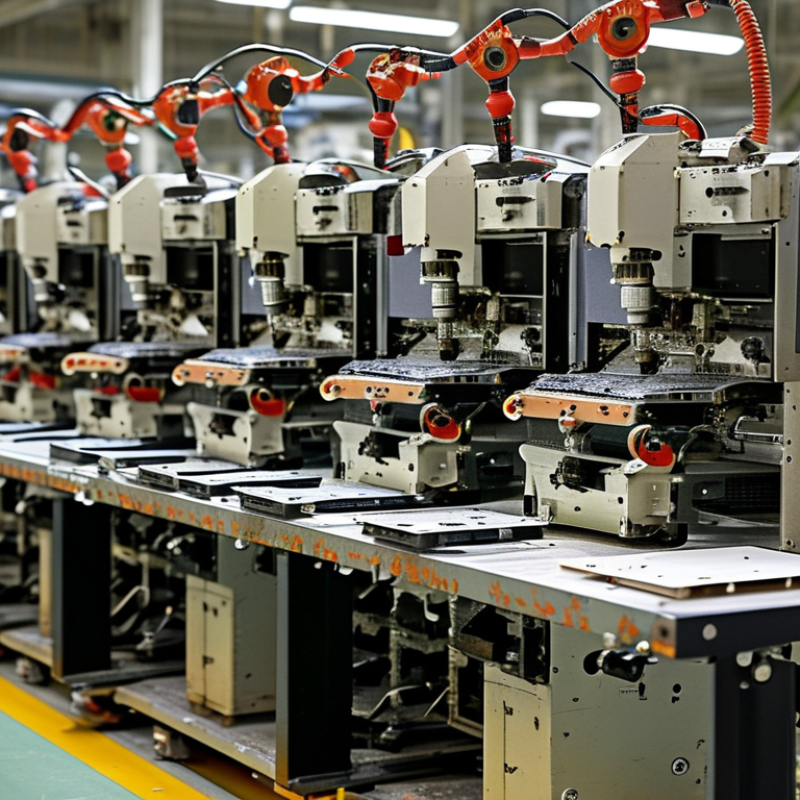
Top Automatic SMT PCB Loader Suppliers for Global Buyers?

What Is an Automatic SMT PCB Loader?

An automatic SMT PCB loader is a machine that feeds bare circuit boards into a surface-mount assembly line. It usually connects to a solder paste printer, inspection system, or pick-and-place machine. A magazine holds stacked PCBs, while a motorized mechanism releases one board at a time. Sensors check its position before transfer. That pause matters.

In practical production, the loader protects board edges and keeps spacing consistent. Adjustable rails support different PCB widths and thicknesses. Antistatic materials help reduce electrostatic discharge risks. Many units also use barcode readers or communication interfaces for traceability. A reliable loader should match the line’s conveyor height, transfer direction, and control protocol. Small details matter.

Experienced engineers inspect loading accuracy, cycle time, magazine capacity, and access for cleaning. A machine may appear fast during a showroom test, yet perform differently with thin, warped, or heavy boards. It is not magic. Incorrect rail pressure can cause scratches, stoppages, or alignment errors. Buyers should request tests with their actual PCB sizes and production conditions. Maintenance access deserves attention too, because dust and paste residue can affect sensors. I would also verify emergency stops, guarding, ESD performance, and documentation before approving installation. Perfect automation is rare, and thoughtful adjustment remains necessary.

What Is an Automatic SMT PCB Loader?

An automatic SMT PCB loader transfers bare PCBs from magazines onto the surface-mount production line. The chart below presents common board-handling dimensions used in automatic loader specifications; actual limits vary by machine configuration.

Larger board formats generally require wider conveyors, adjustable guide rails, and reinforced magazine support. These dimensions are shown in millimeters and represent commonly specified handling ranges for global SMT production equipment.

How Automatic SMT PCB Loaders Work in PCB Assembly Lines

Top Automatic SMT PCB Loader Suppliers for Global Buyers

An automatic SMT PCB loader transfers bare circuit boards into an assembly line with controlled timing. Operators place stacked PCBs into a magazine rack. Adjustable guides hold the boards without pressing their solderable surfaces. A lifting platform then raises each board to the transfer height.

A pusher, belt, or vacuum mechanism moves one PCB onto the conveyor. Sensors check board presence, magazine position, and transfer completion. The line controller communicates with the loader through standard interface signals.

This prevents the next machine from receiving a board too early. Small details matter. Poor guide adjustment can damage edges or cause repeated jams.

In practical assembly work, engineers usually inspect board thickness, dimensions, edge clearance, and magazine capacity before selecting equipment. The loader should match the conveyor width and production cycle.

Anti-static construction is also important near sensitive components. Easy access to sensors and pneumatic parts reduces maintenance time. However, no setting works for every PCB. A thin board may flex, while a heavy panel may need stronger support. That assumption can fail.

Global buyers should request test videos, interface drawings, spare-part lists, and documented acceptance criteria from suppliers. A reliable supplier can explain loading speed under real board conditions, not only laboratory figures.

Buyers should also check changeover steps with different magazines. Fast changeover sounds useful, but unclear adjustments can slow operators. Trial runs often reveal these issues before installation.

Key Features for Comparing Global SMT PCB Loader Suppliers

When comparing automatic SMT PCB loader suppliers, look beyond speed claims. A reliable loader should handle your board sizes, thicknesses, and panel formats without unstable transfers. Check conveyor width adjustment, magazine capacity, sensor accuracy, and ESD protection. These details affect placement-line uptime. From practical line evaluations, smooth magazine indexing often matters more than a higher advertised cycle rate. Ask suppliers for test data using boards similar to yours.

Integration is another key feature. Confirm compatibility with upstream and downstream equipment, communication protocols, and factory software. Clear alarms, recipe storage, and traceability tools reduce operator mistakes. Request a factory acceptance test and a site acceptance test. Review installation training, spare-parts availability, warranty terms, and response times. A low purchase price can become expensive when support is slow. No supplier is perfect. I would still question unclear specifications.

Tips: Compare total ownership cost, not only the quotation. Request sample videos, reference contacts, and a written performance guarantee. Inspect safety guarding, emergency stops, and access for cleaning. Ask whether the supplier can modify the loader after your product mix changes. Small layout differences can create large maintenance problems. Also, measure actual changeover time during a live trial. Supplier reliability is proven through documented tests, consistent communication, and honest answers about limitations.

Top Supplier Selection Criteria for International Buyers

For international buyers, an SMT PCB loader should be judged beyond its purchase price. The International Federation of Robotics reported 541,302 industrial robots were installed worldwide in 2023, a 10% annual increase. This growth raises expectations for stable automation and measurable productivity. Ask suppliers for loading capacity, cycle time, board thickness range, and error recovery data. Request factory acceptance testing with your actual PCB dimensions. A short video is not enough.

Supplier reliability requires evidence. Check ISO 9001 certification, electrical safety documentation, spare-parts availability, and remote-service response times. Confirm whether the machine supports your line communication standards, such as SMEMA or equivalent interfaces. International buyers should also verify voltage options, language settings, customs documents, and local compliance requirements. The IPC Global Electronics Association continues to identify labor shortages and supply-chain pressure as major electronics manufacturing concerns in its industry sentiment reporting. Therefore, simple maintenance matters. A machine that needs one specialist for every adjustment may become expensive.

Tips: Compare total ownership cost over five years. Include installation, training, downtime, consumables, and replacement sensors. Ask for references from factories with similar board sizes. Demand written performance limits. Some suppliers promise impressive cycle times, but those figures may exclude alignment, inspection, or operator intervention. I would test recovery after a jam, because this detail is often overlooked. A cheaper loader can still be the wrong investment.

Installation, Maintenance, and After-Sales Support Considerations

For global buyers, an automatic SMT PCB loader should be judged beyond speed and price. Installation quality affects alignment, board transfer, and operator safety. IPC-6012 and IPC-A-610 provide useful workmanship references, although they do not replace machine-specific commissioning. Ask suppliers for a site-readiness checklist, foundation requirements, utilities, software versions, and acceptance-test records. A practical installation should verify conveyor width, PCB edge clearance, barcode communication, emergency stops, and line synchronization.

Maintenance support is equally important. Deloitte’s 2024 Smart Manufacturing and Operations Survey reported that 86% of manufacturing leaders view smart-factory initiatives as important for competitiveness. Connected equipment helps, but only when technicians receive usable data. Request preventive-maintenance intervals, spare-parts availability, fault-code access, and remote diagnostic procedures. MTBF figures alone can mislead. They may exclude setup errors, worn belts, or unstable factory conditions. We learned this the hard way.

Tips: Require training for operators and maintenance staff, not only installation engineers. Keep a minimum stock of sensors, belts, and grippers. Confirm response times in writing, including weekends and local holidays. Ask for a two-year service plan with escalation contacts. Some suppliers promise fast support but define “response” as an email acknowledgment. That is not recovery. Use a live production trial before final payment, and record every unresolved issue.

Top Automatic SMT PCB Loader Suppliers for Global Buyers? - Installation, Maintenance, and After-Sales Support Considerations
Evaluation Dimension Typical Industry Specification or Planning Range Installation and Maintenance Considerations Questions for Global Buyers Recommended Verification Evidence
PCB Size Compatibility Many automatic loaders are designed for standard board widths of approximately 50–460 mm, depending on the machine configuration. Confirm the usable conveyor width, minimum board length, edge-clearance requirements, and whether tool-less width adjustment is available. Can the loader handle the buyer’s smallest and largest PCB without adapters? Is dual-rail or odd-shaped PCB support required? Approved mechanical drawings, sample-board test report, and signed acceptance criteria.
PCB Thickness and Weight Typical compatible PCB thickness is about 0.4–4.0 mm, while allowable board weight depends on conveyor design and support structure. Thin, flexible, or heavy boards may require additional support, edge gripping, or customized transfer settings. What are the minimum thickness, maximum thickness, maximum board weight, and allowable warpage limits? Technical datasheet, load test, and documented inspection of the buyer’s actual boards.
SMT Line Interface Common interfaces include SMEMA-compatible signaling and, where specified, communication with line-control or factory-monitoring systems. Check signal definitions, connector types, conveyor height, board-transfer direction, and interface responsibility between equipment suppliers. Is the loader compatible with upstream and downstream equipment? Are interface cables and electrical diagrams included? I/O list, interface wiring diagram, line-layout drawing, and integration test record.
Conveyor Height Adjustment SMT conveyor heights commonly fall within approximately 900–950 mm, but the exact range varies by production line. Verify adjustment range, floor conditions, leveling feet, access clearance, and alignment tolerances before delivery. Can the equipment match the existing line height without a custom steel frame or major site modification? Final layout, installation checklist, and measured height report after commissioning.
Magazine Capacity Magazine capacity commonly ranges from around 10 to 30 PCBs, depending on PCB thickness, magazine pitch, and equipment design. Magazine loading and unloading areas should be accessible to operators and compatible with the factory’s PCB storage method. What magazine dimensions and pitch are supported? Are standard magazines supplied, or must they be purchased separately? Magazine specification sheet, sample magazine test, and capacity verification.
Installation Scope A standard installation normally includes mechanical positioning, leveling, electrical connection, signal testing, and line alignment. Clarify whether travel, accommodation, lifting equipment, local labor, utilities, and site preparation are included in the quotation. Who is responsible for unloading, positioning, cabling, compressed air, grounding, and safety inspection? Written statement of work, site-readiness checklist, and installation completion certificate.
Commissioning and Acceptance Commissioning should verify stable transfer, correct sensor operation, alarm handling, emergency-stop performance, and communication with adjacent machines. Acceptance should use representative production boards rather than an empty conveyor test only. What throughput, transfer accuracy, defect rate, and continuous-run duration are included in the acceptance test? Factory acceptance test and site acceptance test with recorded results.
Operator Training Basic training should cover operation, recipe or parameter setup, magazine handling, alarms, safety procedures, and routine cleaning. Training materials should be available in English and, where necessary, in the local operating language. How many operators and maintenance technicians can attend? Is refresher or remote training available? Training agenda, user manual, maintenance manual, and attendance record.
Preventive Maintenance Routine tasks generally include cleaning sensors, inspecting belts and rollers, checking fasteners, lubricating specified components, and verifying safety devices. Maintenance intervals should be based on operating hours, production volume, and environmental conditions rather than calendar time alone. Which tasks are daily, weekly, monthly, or annual? Are special tools or calibration devices required? Preventive-maintenance schedule, checklist, spare-parts list, and lubrication chart.
Critical Spare Parts Common wear or failure items may include sensors, belts, rollers, pneumatic fittings, motors, relays, and control components. Buyers should identify parts with long procurement times and maintain an agreed minimum stock for critical production assets. Which parts are recommended for two years of operation? Are part numbers and interchangeability information provided? Recommended spare-parts list, service-life guidance, and stockholding proposal.
Remote Technical Support Effective support normally requires email, telephone, video assistance, troubleshooting documents, and remote access when permitted by the buyer’s IT policy. Remote support is more effective when the supplier receives alarm codes, photographs, videos, logs, and machine identification details. What are the support hours, supported time zones, response targets, and escalation process? Service-level agreement, support contact matrix, and sample troubleshooting workflow.
On-Site Service Availability On-site assistance depends on the supplier’s service network, local partners, visa requirements, and travel distance. International buyers should confirm whether service is provided directly or through a trained local service organization. What is the target dispatch time? Who pays for travel, labor, accommodation, and replacement parts? Regional service coverage map, engineer qualification records, and contractual response terms.
Warranty Coverage Industrial equipment warranties are commonly defined by a fixed period from shipment, installation, or acceptance; the exact term must be stated in writing. Warranty exclusions often relate to consumables, misuse, unauthorized modifications, unsuitable utilities, or normal wear. When does the warranty begin? Are labor, travel, software, sensors, and replacement parts covered? Signed warranty policy, exclusion list, and claim-handling procedure.
Electrical and Safety Compliance The equipment should be supplied with applicable electrical drawings, risk information, protective-device specifications, and safety instructions for the destination market. Country-specific requirements may affect voltage, frequency, plugs, guarding, labeling, emergency stops, and documentation language. Which conformity documents are supplied? Can the machine be configured for the destination country’s electrical standard? Declaration or certificate where applicable, risk assessment, electrical schematic, and safety inspection record.
Utilities and Site Readiness Typical requirements may include single-phase or three-phase electrical power, protective grounding, and clean compressed air for pneumatic functions. Exact voltage, frequency, current, air pressure, air quality, floor loading, and clearance requirements must be confirmed before shipment. What utility specifications and minimum service clearances are required? Is an air dryer or regulator necessary? Utility requirement sheet, site-readiness checklist, and pre-installation survey.
Documentation Quality A complete documentation package should include operating instructions, maintenance procedures, parts lists, electrical drawings, pneumatic diagrams, and troubleshooting guidance. Document revision control is important when software, electrical components, or mechanical assemblies are changed. Are documents provided in editable or searchable formats? How are revisions and updates communicated? Document index, revision history, and sample manuals supplied before final acceptance.
Total Cost of Ownership The purchase price is only one part of total cost; freight, installation, training, utilities, spare parts, software, service visits, and downtime should also be assessed. Compare suppliers using the same delivery terms, scope of supply, acceptance criteria, warranty assumptions, and service response obligations. Are installation, commissioning, training, spare parts, software updates, and future service fees included or optional? Five-year cost model, itemized quotation, service-rate card, and lifecycle-spares plan.
Buyer planning note: The specifications and ranges shown are typical planning benchmarks for automatic SMT PCB loaders, not universal guarantees. Final values should be confirmed against the selected machine configuration, actual PCB samples, local electrical requirements, line layout, and the signed purchase and service agreement.

FAQS

: What does an automatic SMT PCB loader do?

: It transfers bare circuit boards into an assembly line at controlled intervals. A lifting platform raises each board to conveyor height.

How does the loading process work?

Operators stack PCBs inside a magazine rack. Adjustable guides hold the boards carefully. A pusher, belt, or vacuum unit moves one board forward.

Which PCB details should buyers check before selection?

Check board thickness, dimensions, edge clearance, and magazine capacity. Thin boards may flex during transfer. Heavy panels may need stronger support.

Why are sensors important in a PCB loader?

Sensors confirm board presence, magazine position, and transfer completion. They help prevent early or incomplete transfers. Small details matter.

What line compatibility information should buyers request?

Ask for conveyor-width limits and standard interface requirements. Confirm voltage options and language settings. Request interface drawings before purchase.

How can international buyers evaluate supplier reliability?

Request test videos, spare-part lists, and written acceptance criteria. Ask for performance tests using your actual PCB dimensions. A short video is not enough.

What should a factory test during acceptance?

Test loading speed, alignment, jam recovery, and magazine changeover. Watch the machine handle different board sizes. Real conditions matter.

What maintenance features reduce operating costs?

Choose accessible sensors and pneumatic components. Simple adjustments reduce maintenance time. Remote support and spare sensors also matter.

Is the lowest purchase price usually the best choice?

Not always. Compare installation, training, downtime, consumables, and replacement parts over five years. A cheaper loader can still become the wrong investment.

Conclusion

An Automatic Smt Pcb Loader is an essential piece of equipment in modern PCB assembly lines, designed to transfer printed circuit boards smoothly and consistently between production stages. By coordinating board loading, alignment, and conveyor movement, it helps reduce manual handling, improve production efficiency, and protect sensitive components and circuit surfaces. Understanding how the loader connects with upstream and downstream machines is important for creating a stable and well-organized SMT workflow.

For global buyers, supplier evaluation should focus on machine compatibility, loading capacity, cycle speed, construction quality, control-system flexibility, safety features, and ease of operation. Reliable suppliers should also provide clear technical documentation, installation guidance, operator training, spare parts availability, and responsive after-sales service. Before placing an order, buyers should confirm electrical standards, communication interfaces, shipping requirements, maintenance procedures, and warranty terms. Selecting a supplier with strong customization capabilities and dependable long-term support can help ensure smooth installation, consistent performance, and lower operating risks across different production environments.


Ethan

Ethan

Ethan is a seasoned marketing professional with a deep expertise in our company's innovative product line. With a passion for sharing knowledge and insights, he takes the lead in regularly updating our corporate blog, where he explores industry trends, product features, and effective marketing......