Choosing the top Lead-Free Wave Soldering Machine in 2026 requires more than comparing catalog prices or heating zones. Production teams need evidence from real assembly lines, not polished brochures. A reliable machine should deliver stable solder flow, accurate preheating, low dross formation, and repeatable results across different board designs. It must also support modern lead-free alloys, which often demand higher temperatures and tighter process control.
The most useful evaluation begins with measurable details. Consider conveyor speed, nitrogen performance, flux management, solder pot capacity, and temperature uniformity. Watch the operator’s workflow. A clear touch-screen interface, accessible maintenance points, and safe changeover procedures can save hours each week. Independent inspection records, factory acceptance tests, and customer feedback provide stronger evidence than broad marketing claims. IPC-based process checks may also help verify solder quality and consistency.
Still, no machine wins every production environment. A high-throughput line may value automation, while a smaller contract manufacturer may prioritize flexibility and easy cleaning. That difference matters. Energy use, floor space, spare-part access, and technical support can change the total ownership cost significantly. Some impressive specifications may perform poorly when boards include heavy copper areas or mixed thermal masses. That assumption can fail.
This guide examines leading options through practical engineering criteria, manufacturer documentation, and realistic factory needs. It also considers weaknesses, because honest comparison should expose them. The final choice should match your boards, alloy, volume, workforce, and quality targets. A machine is only “top” when it remains dependable after months of production, maintenance, and unexpected process changes.
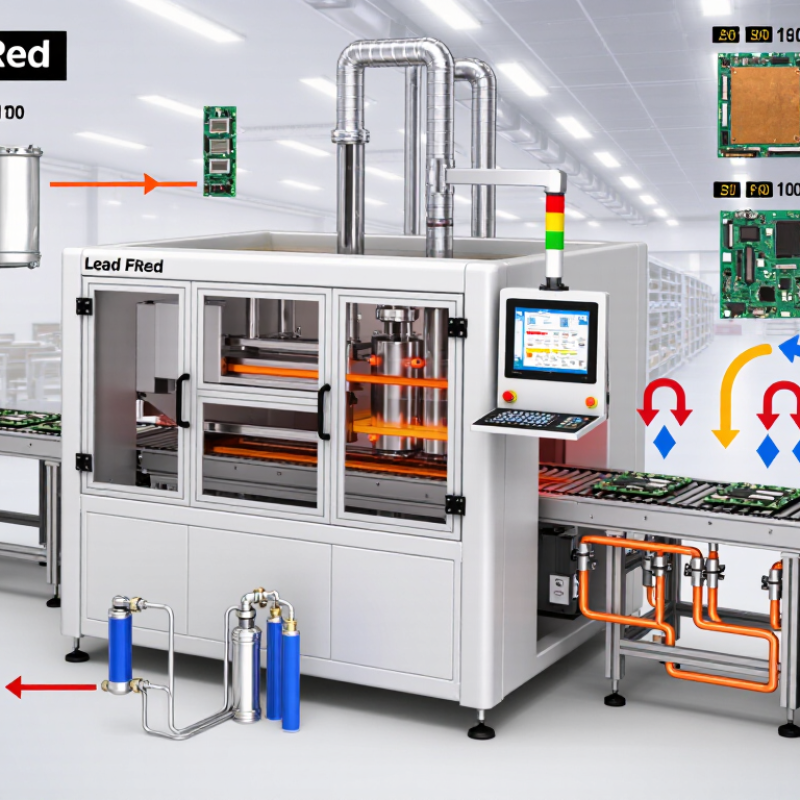
Lead-free wave soldering joins through-hole components with molten, lead-free alloy. Common alloys use tin, silver, and copper, often called SAC alloys. The process has four core stages: fluxing, preheating, wave contact, and cooling. Flux removes oxides. Preheating activates it and limits thermal shock. The solder wave then fills holes beneath the circuit board. Cooling controls joint shape and reliability.
Its purpose is not simply to replace lead. It also reduces hazardous material exposure and supports modern environmental requirements. The Global E-waste Monitor 2024 reported 62 million tonnes of electronic waste in 2022. Only 22.3% was formally collected and recycled. Better material choices matter, but process control matters too. A top machine in 2026 should offer stable wave height, accurate preheating, nitrogen control, and traceable temperature data. In production trials, small conveyor changes can create large solder defects. The theory feels cleaner than the factory floor.
Tips: Select equipment around board size, copper mass, flux type, and daily throughput. Check thermal profiles on real assemblies, not only empty test boards. Inspect solder bridges, icicles, and incomplete hole fill. Keep oxygen readings and bath temperature records. “Low defect” is not enough. Review the evidence. Monitor dross, nozzle wear, and maintenance time before purchasing. These details often reveal the machine’s real operating value.
The top lead-free wave soldering machine in 2026 must control heat, oxygen, and solder movement precisely. Lead-free alloys usually require higher process temperatures than tin-lead materials. The European Commission’s RoHS framework limits lead to 0.1% in homogeneous materials. This makes stable thermal control a production necessity.
Key features include multi-zone preheating, closed-loop temperature sensors, and nitrogen management. A 2025 market analysis by Mordor Intelligence projects continued growth in automated soldering equipment through 2030. That growth reflects demand for repeatable quality and lower rework. An accurate spray fluxer should adjust volume by board width and speed. Excess flux can create residue. Too little can produce incomplete joints.
A reliable solder pot needs automatic level monitoring, oxide reduction, and easy maintenance access. Conveyor width should change quickly for mixed production. Digital records should capture temperature, conveyor speed, nitrogen flow, and alarm history. IPC process standards also emphasize measurable control and documented verification. Energy monitoring matters, too. A well-insulated machine can reduce wasted heat during long shifts. However, nitrogen savings are often overstated without checking leakage and actual oxygen levels. That deserves scrutiny. Operators still need clear screens, safe access, and practical training. A technically advanced machine can fail in real production when cleaning takes too long or alarms confuse the team.
The top lead-free wave soldering machine is not simply the fastest model. It should deliver stable joints, suitable capacity, and measurable energy control. Lead-free alloys often require higher operating temperatures, so accurate preheating and controlled solder temperature are essential. Check for smooth fillets, complete hole fill, and minimal bridges or icicles. Inspect sample boards with visual checks, AOI, and occasional cross-sections. Small defects can reveal poor flux control or uneven conveyor movement.
Capacity must match real production, not an optimistic brochure figure. Compare conveyor width, board spacing, product changeover time, and stable boards-per-hour output. A machine may process wide assemblies but perform poorly with heavy thermal areas. Ask for test results using your actual board materials and components. The comparison is rarely neat. Energy use also deserves direct measurement. Review heater power, standby consumption, solder-pot insulation, and exhaust requirements. Record kilowatt-hours per board during normal production, not only during warm-up.
Tips: Request a documented trial with your alloy, flux, and representative assemblies. Measure temperature profiles at several board locations. Check whether operators can clean the solder pot safely and repeatably. A lower purchase price may hide longer warm-up times or excessive maintenance. Also, do not overvalue automation. Useful data can matter more than impressive screens.
The best lead-free wave soldering machine depends on the board, not the catalog headline. Lead-free alloys require higher solder temperatures and tighter thermal control. A dual-wave machine suits dense through-hole boards with mixed component sizes. Its turbulent wave fills narrow gaps, while the smooth wave improves final solder appearance. This setup fits high-volume electronics assemblies with stable product designs.
A selective wave soldering machine is better for mixed-technology boards. It applies solder only to chosen through-hole joints. This reduces thermal stress around sensitive surface-mount components. It also supports frequent product changes and smaller batches. Nitrogen-assisted systems can reduce oxidation and dross, especially during long production shifts. Still, gas consumption and maintenance deserve careful calculation. The most advanced machine may perform poorly without correct flux settings and conveyor control.
Tips: Check the usable conveyor width, preheat zones, nozzle access, and solder pot capacity. Request thermal profiles from real sample boards, not only empty test panels. Measure hole fill, bridging, dross, and changeover time. Ask operators about cleaning frequency. Their comments often reveal practical weaknesses. Do not ignore them. A machine can look impressive during a demonstration, yet struggle with warped boards or uneven component loading. Trial results should guide the final decision.
What Is the Top Lead Free Wave Soldering Machine in 2026?
The top lead-free wave soldering machine is not simply the fastest model. It should deliver stable preheating, consistent wave height, and controlled solder temperature. In practical production, I would inspect thermal profiles across several boards, not just one successful test. A machine should handle different board sizes without frequent manual adjustments. Easy access to pumps, nozzles, filters, and flux systems also matters. Small maintenance delays can become expensive.
Operating cost requires more than checking the purchase price. Track electricity, solder consumption, flux usage, nitrogen, labor, and planned maintenance. A stable solder pot can reduce dross, but poor setup may cancel that benefit. Energy-efficient heaters are useful, although their savings depend on daily production hours. I would request a realistic cost trial using actual boards. Brochures rarely show the whole picture.
Future machines will likely combine connected sensors, automatic profile control, and stronger process traceability. Data can reveal rising dross, unstable temperatures, or blocked spray nozzles before defects increase. Closed-loop control looks promising, but it still needs skilled operators and regular calibration. Automation is not magic. Some factories may overinvest in software while ignoring conveyor alignment and cleaning routines. The best 2026 choice should balance reliability, operating cost, repair access, and production flexibility. That balance may look different for every factory.
A practical machine-selection benchmark should prioritize thermal stability, nitrogen efficiency, solder consumption, uptime, maintenance access, and process control. The chart estimates annual operating costs for a production line running 4,000 hours per year, using an average electrical load of 12 kW, nitrogen usage of 20 Nm³ per hour, electricity at $0.15/kWh, and nitrogen at $0.135/Nm³.
The benchmark indicates that solder consumption and labor typically represent the largest controllable cost areas. A competitive 2026 machine should reduce dross and solder usage, maintain stable wave height and temperature, minimize nitrogen demand, and support fast preventive maintenance. Values are planning benchmarks rather than quotations from any specific supplier.
It should control heat, oxygen, solder movement, and conveyor speed precisely. Lead-free alloys usually need higher temperatures. Stable control matters.
Multiple zones warm boards gradually and reduce thermal shock. Closed-loop sensors help maintain steady temperatures. One successful board proves very little.
An adjustable spray fluxer should match board width and conveyor speed. Too much flux leaves residue. Too little causes incomplete joints.
Look for automatic level monitoring, oxide reduction, and easy maintenance access. Check pumps, nozzles, and filters physically. Access saves time.
Record nitrogen flow and actual oxygen levels during production. Check for leaks around the chamber and seals. Claimed savings may be overstated.
Useful records include temperature, conveyor speed, nitrogen flow, and alarm history. These details support process verification. Data alone cannot fix poor setup.
Include electricity, solder, flux, nitrogen, labor, and planned maintenance. Test with real boards and normal shift hours. Purchase price is incomplete.
Fast conveyor-width adjustment, clear screens, safe access, and simple cleaning matter greatly. Confusing alarms create avoidable mistakes. Advanced software is not magic.
No. Sensors and profile control can detect changing conditions, but calibration and judgment remain necessary. Automation still needs people.
Inspect thermal profiles across several board sizes and production runs. Check joint consistency, cleaning time, and maintenance access. Brochures rarely show everything.
In 2026, a Lead-Free Wave Soldering Machine is an essential solution for manufacturers seeking reliable, environmentally responsible, and efficient PCB assembly. It uses controlled molten lead-free solder waves to join through-hole components, while precise preheating, flux application, temperature control, and conveyor movement help achieve stable solder quality. Top machines are expected to offer accurate process monitoring, flexible production settings, low solder consumption, reduced energy use, and compatibility with different board sizes and component layouts.
When comparing equipment, manufacturers should evaluate solder consistency, throughput, thermal control, maintenance requirements, operating costs, and overall energy efficiency. Selective wave systems are suitable for mixed-technology or smaller-volume production, while full-wave systems are better for high-volume assembly. The right choice depends on product design, capacity targets, factory space, and long-term production plans. Future trends will focus on smarter automation, real-time data analysis, improved material efficiency, lower emissions, and more adaptable manufacturing processes.

Yichun Electronic