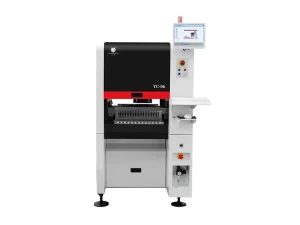
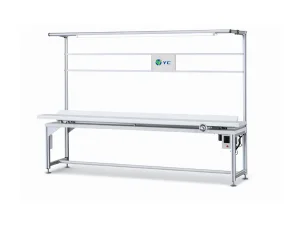
Explore top-tier SMT equipment integrated with advanced micro-zone thermal controllers.
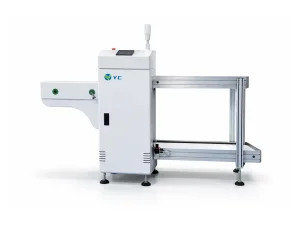
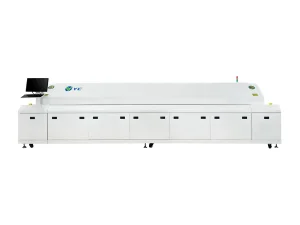
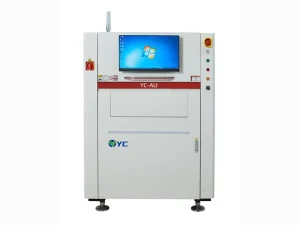
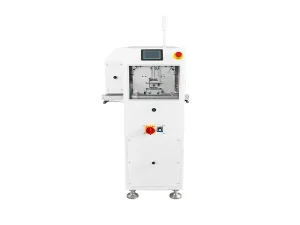
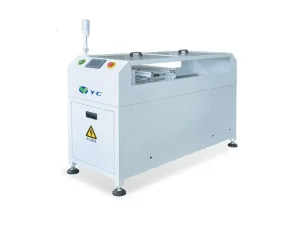
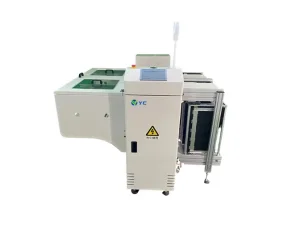
The world of Surface Mount Technology (SMT) has undergone a profound structural shift. What began as maker-space initiatives—converting standard convection toaster ovens using custom DIY reflow oven controllers—has evolved into a sophisticated discipline underpinning hardware prototyping, quick-turn PCBA manufacturing, and high-volume industrial production. Today, hardware engineers, R&D laboratories, and OEM factories demand closed-loop thermal profiles that adhere to rigorous IPC/JEDEC J-STD-020 standards without compromise.
Whether operating an open-source PID controller powered by microcontrollers (such as ESP32, STM32, or ATmega328P) using K-type thermocouple compensation, or deploying enterprise-grade multi-zone forced-convection continuous reflow ovens, the primary physics remains unchanged: maximizing thermal transfer efficiency while suppressing delta-T (ΔT) across complex PCB layouts.
DIY reflow controllers enable hardware startups and engineering labs to execute precise ramp-soak-spike profile stages on prototype boards featuring fine-pitch BGA and 0201 passive components.
Industrial controller topologies leverage Solid State Relays (SSRs) with phase-angle or zero-crossing pulse-width modulation (PWM) to eliminate thermal overshoot and high-frequency EMI noise.
Modern automated SMT lines bridge custom embedded controllers with multi-zone heating chambers to achieve mass-production throughputs exceeding hundreds of assemblies per hour.
The global market for SMT soldering solutions spans two distinct segments: custom/DIY reflow oven controllers tailored for makers, universities, and low-volume pilot manufacturing; and industrial multi-zone reflow convection ovens manufactured by specialized OEMs for turnkey automated SMT lines.
| Vector Dimension | DIY Reflow Oven Controller Systems | Industrial Multi-Zone Reflow Systems |
|---|---|---|
| Primary Target User | Makers, Hardware Prototyping Labs, University Engineering Labs | EMS Manufacturers, Automotive Electronics, High-Volume SMT Lines |
| Thermal Control Method | Single-zone PID PWM control via Solid State Relay (SSR) | Multi-zone (8 to 12 zones) continuous forced hot-air convection |
| Thermocouple Topology | 1–2 Sensor Points (Cold junction compensated MAX31855/MAX31856) | Multi-channel real-time internal profilers + multi-zone air feedback sensor grids |
| Atmosphere Control | Ambient air (Oxidative environment) | Nitrogen (N2) purge optional (<100 ppm O2 levels for minimum voiding) |
| Throughput Capacity | Batch processing (1 PCB per cycle, ~5-8 mins per board) | Continuous conveyor processing (100–500 PCBs/hr depending on board size) |
| Delta-T (ΔT) Suppression | High variability across mixed copper thermal masses (5°C – 15°C ΔT) | Ultra-tight thermal uniformity across heavy BGAs and small chips (< 2°C ΔT) |
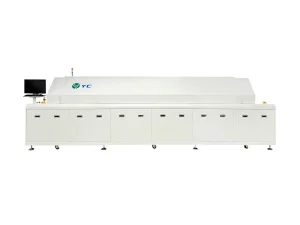
As printed circuit boards become denser with micro-BGA packages (0.3mm pitch) and 01005 passives, reliance on uncalibrated single-zone DIY reflow units introduces failure modes such as tombstoning, voiding, thermal shock cracking, and incomplete intermetallic layer formation. Leading electronics factory integrators, such as Yichun Electronic Automation, resolve these thermal bottlenecks by converting micro-zone PID control methodologies into scalable 8-zone and 10-zone industrial reflow furnaces.
To engineer or select a famous DIY reflow oven controller or industrial equivalent, one must understand the precise physics of reflow soldering profiles. Liquidus phase transitions for SAC305 (Sn96.5/Ag3.0/Cu0.5) lead-free solder pastes occur strictly at 217°C, requiring four deterministic profile phases:
Target Slope: 1.0 - 3.0 °C/sec
Controls preheating speed to prevent thermal shock to ceramic chip capacitors and prevent liquid flux spattering.
150°C to 200°C (60-120 sec)
Equalizes board-level temperatures, activates chemical flux to remove copper oxides, and reduces void formation under BGA spheres.
Peak 235°C - 245°C (TAL 45-75s)
Solder reaches full liquidus. Time Above Liquidus (TAL) builds intermetallic compound (IMC) structural bond depth (1–3 µm).
Cooling Rate: -2.0 to -4.0 °C/sec
Fast cooling yields fine-grained grain microstructures, ensuring maximum fatigue resistance and joint mechanical shear strength.
Top-tier DIY controllers and industrial heating zone control boards utilize high-speed ADC sampling paired with SPI-interfaced thermocouple ICs (e.g., MAX31856 with cold-junction compensation). Crucially, the mathematical control loop runs an optimized Proportional-Integral-Derivative (PID) algorithm:
Where thermal overshoot is suppressed by dynamic integral windup limits and predictive derivative dampening. When driving infrared quartz heaters or forced-air heating banks, software duty cycles are mapped via zero-cross SSRs to eliminate power line harmonics and electrical interference with nearby SMT inspection equipment.
The requirements for reflow oven controllers and industrial soldering ovens differ drastically across global manufacturing hubs. Below is a breakdown of localized deployment scenarios and hardware configurations optimized for regional market demands:
Focus: Prototyping Labs, Aerospace & Medical Electronics
Demands open-architecture, highly customizable DIY reflow controllers with detailed real-time telemetry logging, custom Python software interfaces, and compliance with IPC-A-610 Class 3 soldering tolerances for defense and biomedical R&D.
Focus: Rapid Industrial Scaling & High Reliability
EMEA and APAC manufacturing sectors require robust turn-key multi-zone reflow ovens that transition seamlessly from initial R&D controller profiles into continuous 24/7 conveyor lines. Cost efficiency, energy conservation, and fast maintenance turnarounds are key.
Focus: Ultra-High Volume Consumer Electronics
Deployment of 10-zone lead-free convection reflow systems equipped with dual-rail transport, integrated closed-loop AOI feedback loops, and intelligent power management to reduce factory floor KWh consumption during high-speed runs.
The boundary between open-source DIY reflow oven controller design and industrial automated reflow machinery is blurring due to modern AI integration and smart sensor networks. Key innovation vectors include:
Traditional static PID gain values (Kp, Ki, Kd) are being replaced by adaptive neural network controllers. These controllers monitor thermal mass variations in real time and automatically adjust heater output on a board-by-board basis to ensure zero profile variance.
Next-generation reflow systems incorporate internal long-wave infrared (LWIR) thermal cameras. By feeding live thermal topographies back into zone controllers, localized micro-heaters adjust dynamically to compensate for heavy thermal ground planes.
Modern controllers natively export MQTT/OPC-UA data pipelines. Machine operators can track thermal profiles, energy usage metrics, and preventative maintenance notifications remotely via unified cloud dashboards.
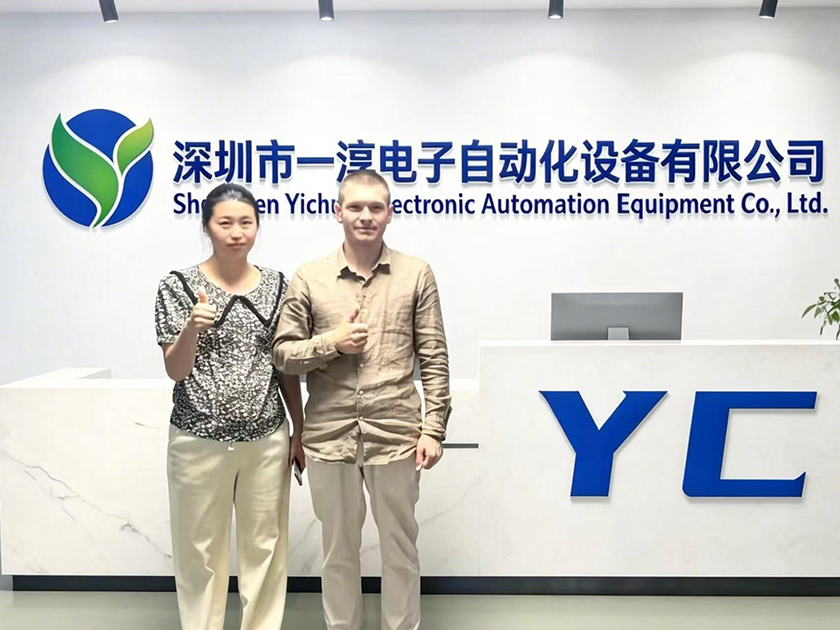
Shenzhen Yichun Electronic Automation Equipment Co., Ltd., founded in 2013, is a practical SMT production line solution provider and integrator focused on helping electronics manufacturers build stable and efficient manufacturing lines.
We specialize in SMT line planning, equipment integration, installation, and technical support based on real factory production requirements. Our solutions combine reliable SMT equipment with practical engineering experience to deliver cost-effective and easy-to-operate production lines for growing manufacturers.
Our main solutions include reflow ovens, wave soldering systems, SMT production lines, automatic printers, pick-and-place machines, and related peripheral equipment. Rather than focusing only on individual machines, we emphasize complete line configuration, factory layout optimization, and long-term operational stability.
Yichun Electronic operates a demonstration and training showroom used for equipment testing, solution verification, and customer visits, helping clients better understand production processes before implementation.
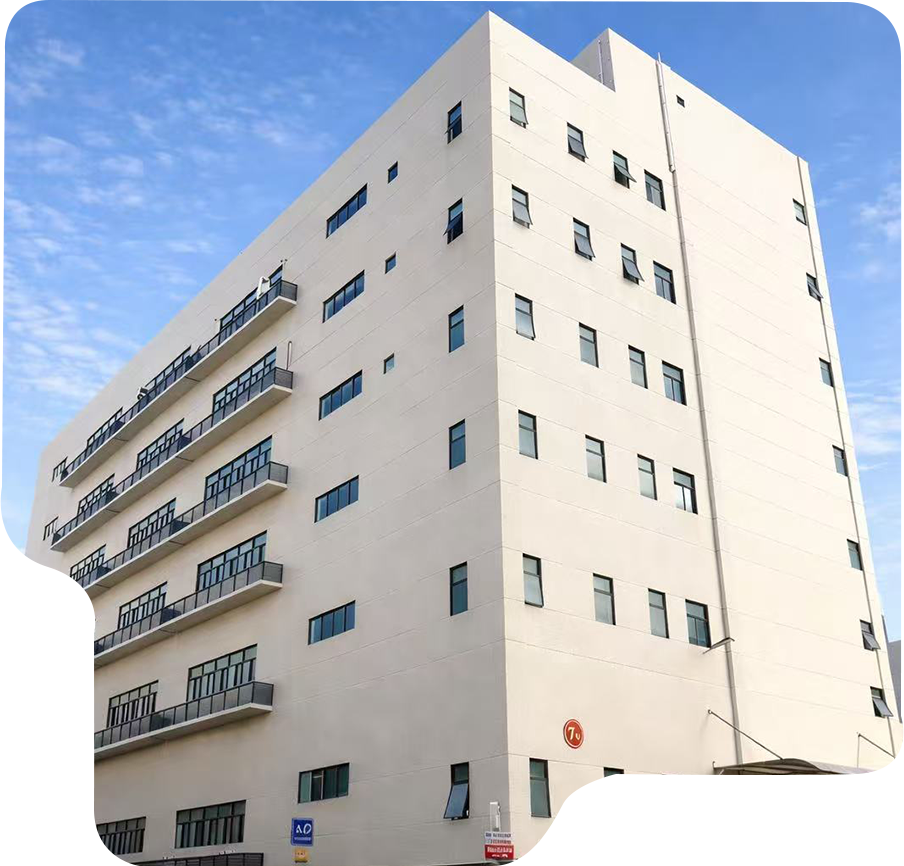
Our solutions are applied in consumer electronics, industrial control, communication products, and automotive electronics. We have supported SMT line projects in regions including Southeast Asia, South Asia, and Eastern Europe, providing installation, technical assistance, and ongoing service support.
Guided by practical engineering, reliability, and continuous customer success.
To provide practical, stable, and cost-effective SMT automation solutions that help electronics manufacturers improve productivity, maintain consistent product quality, and grow their manufacturing capabilities with confidence.
To become a reliable long-term SMT line integration partner for manufacturers seeking practical solutions, flexible equipment configurations, and dependable engineering support.
We focus on real production needs rather than theoretical configurations. From initial line planning to installation and long-term maintenance, our engineering team provides continuous support throughout the entire manufacturing lifecycle to ensure stable and efficient production.
Engineered to deliver seamless automation across every stage of the surface-mount process.
Experience in configuring complete SMT production lines based on real factory requirements and production capacity targets.
Integration of reliable SMT equipment brands to create balanced solutions combining performance, stability, and cost efficiency.
On-site installation, operator training, and technical assistance to ensure smooth production startup and stable operation.
Remote and on-site support to quickly resolve equipment issues and minimize downtime.
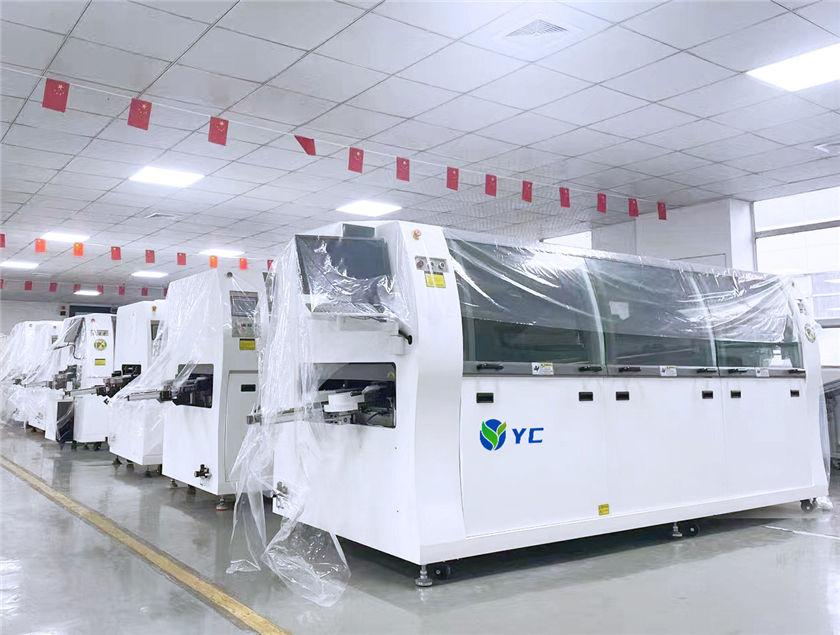
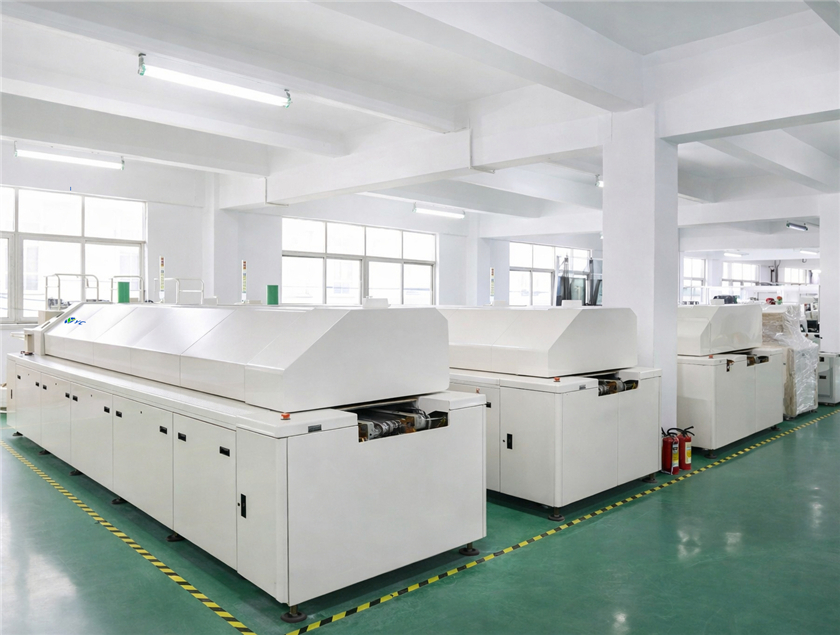
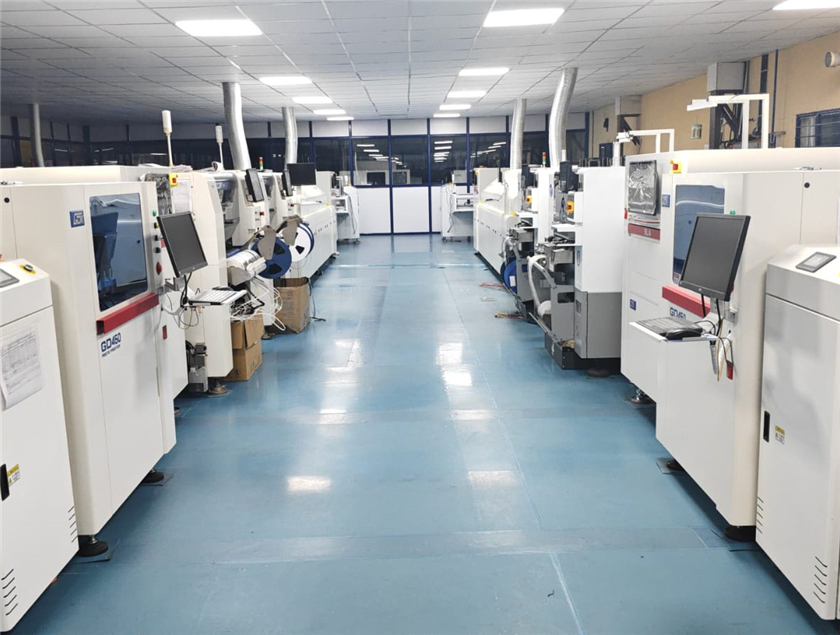
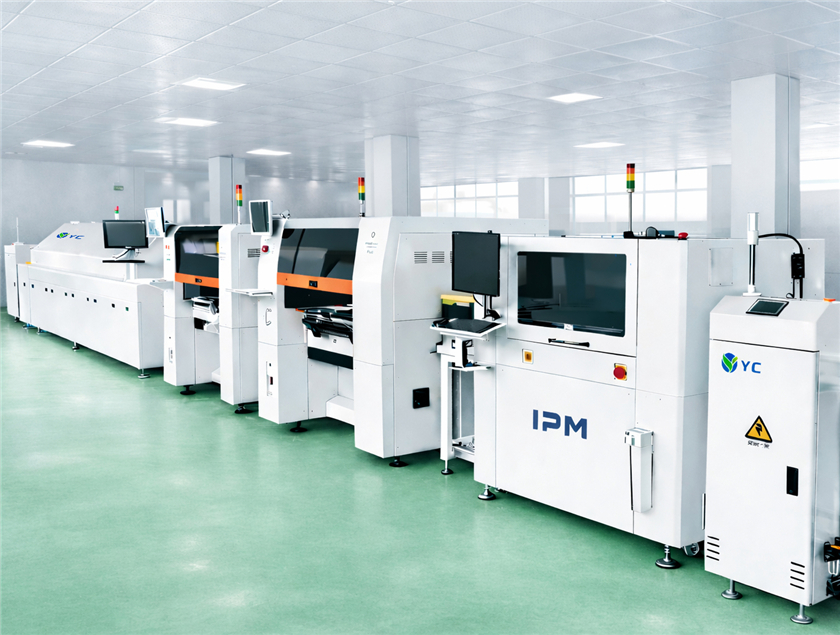
Why leading electronics manufacturers choose Yichun integrated SMT ecosystems.
Carefully selected equipment and key components designed for long-term continuous production environments.
Optimized thermal systems, conveyor structures, and line balancing improve throughput and reduce bottlenecks.
Energy-saving design concepts and intelligent control help reduce operating costs.
Clear software interfaces and practical design make training easier and reduce operator learning time.
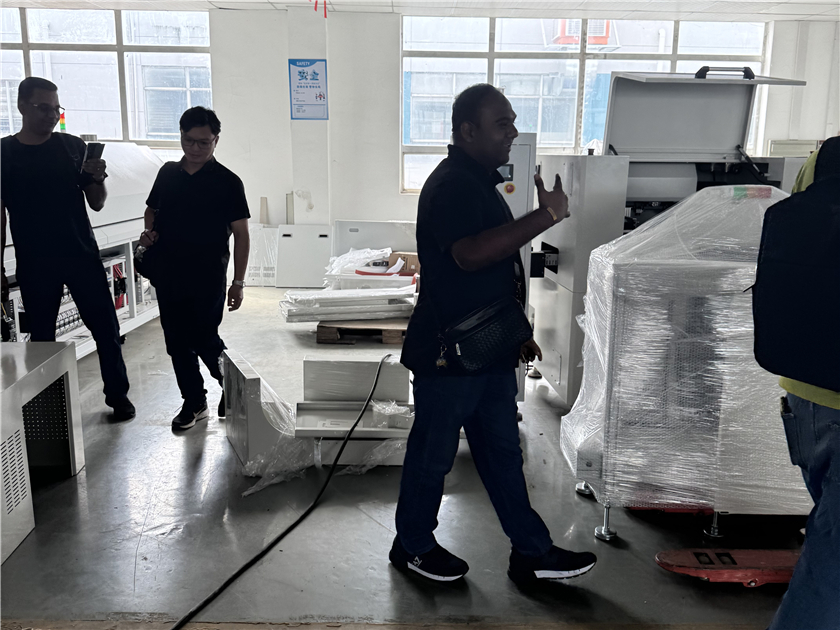
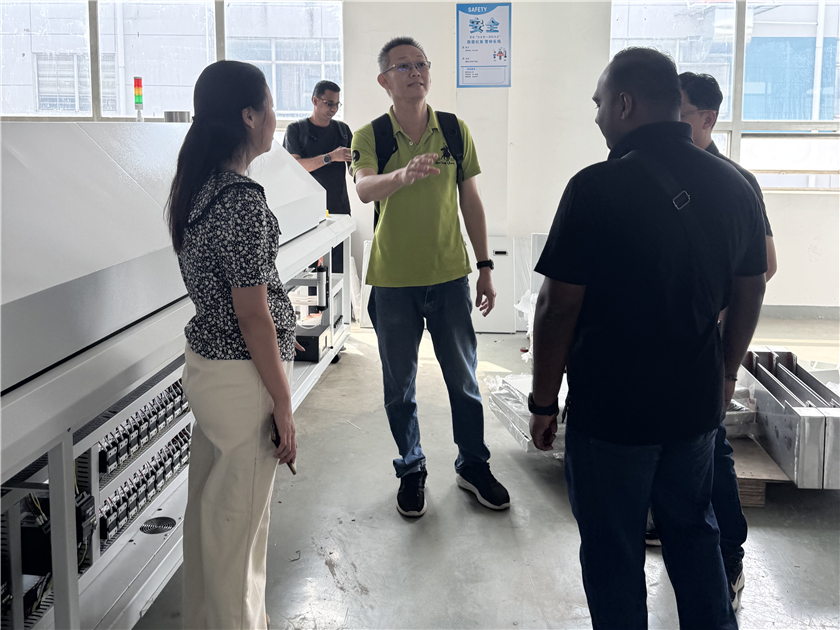
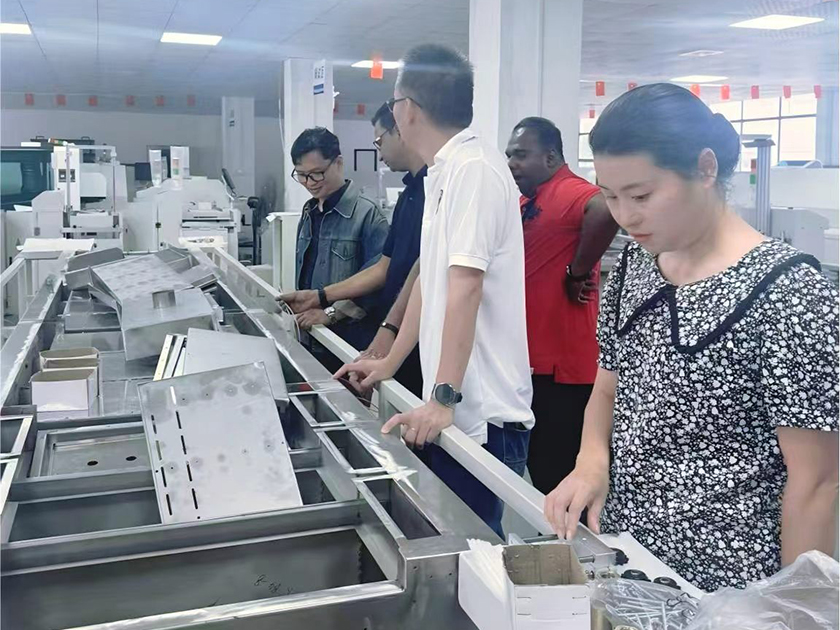
Whether tuning a DIY reflow controller or configuring a 10-zone industrial SMT reflow furnace, thermal profile miscalibrations manifest in specific visual and structural solder defects. Below is an engineering matrix for diagnosing and solving reflow anomalies:
| Defect Mode | Root Physical Cause | DIY Controller Adjustment | Industrial Reflow Solution |
|---|---|---|---|
| Tombstoning (Manhattan Effect) | Unequal thermal mass or unbalanced flux wetting speed at component terminals. | Reduce ramp rate in preheat stage to 1.5°C/s; lengthen thermal soak time. | Optimize convection fan RPM in Soak Zone 2; enforce dual-side heating symmetry. |
| Solder Balling | Rapid heating causes flux solvent to vaporize violently, ejecting solder paste droplets. | Lower initial Ramp-to-Soak slope; ensure solder paste is completely thawed before printing. | Adjust Zone 1 & 2 temperature gradients; extend soak stage to vent solvents smoothly. |
| BGA Voiding (>15%) | Entrapped flux volatiles unable to escape during liquidus phase before solidification. | Increase Peak Temperature by 3–5°C and extend TAL (Time Above Liquidus) by 10s. | Activate Nitrogen (N2) atmosphere purge (< 500 ppm O2) or apply vacuum-assisted reflow zone. |
| Charred Board / De-lamination | Excessive peak temperature or thermal overshoot due to high PID proportional gain. | Dampen PID Kp parameter; re-calibrate MAX31856 cold-junction thermocouple offset. | Increase conveyor speed; calibrate localized heating elements via multi-point thermocouple profiling. |
Expert insights addressing technical queries on DIY controllers and industrial reflow equipment.
A DIY reflow oven controller is typically an add-on electronic module (using microcontrollers like STM32 or ESP32) designed to retrofit standard consumer toaster ovens for single-board batch soldering. In contrast, an industrial reflow oven features continuous mesh/pin conveyors, multiple independently controlled heating zones (8 to 12+ zones), forced hot-air convection, optional nitrogen purges, and high-throughput reliability engineered for 24/7 manufacturing environments.
K-type thermocouples measure actual thermal energy transferred to components rather than ambient chamber air. For accurate profile creation, thermocouples should be attached using high-temperature thermal epoxy directly to high-thermal-mass components (such as BGAs, large inductors, or ground planes) as well as light passive components (0402/0603) to ensure the temperature delta (ΔT) remains within safe bounds (<5°C across the board).
Yes, provided the oven hardware delivers sufficient wattage (typically > 1500W for a small chamber) and forced air circulation. SAC305 requires peak temperatures between 235°C and 245°C. DIY controllers utilizing zero-cross SSR control and fine-tuned PID parameters can achieve these temperatures, though thermal uniformity across large PCBs may lag behind dedicated industrial convection systems.
Shenzhen Yichun Electronic provides complete SMT line planning and integration. We assist hardware companies in scaling from prototype lab environments by configuring turnkey automated assembly lines—including solder paste printers, high-speed pick-and-place machines, multi-zone reflow ovens, AOI inspection, and conveyor handling systems tailored to your target output.
As electronics manufacturing continues to evolve, Yichun Electronic remains focused on delivering practical SMT line solutions that help manufacturers build reliable and efficient production capabilities. We believe stable equipment, realistic engineering design, and long-term technical support are the foundation of successful manufacturing operations.
Whether customers are setting up a new SMT line or optimizing an existing production process, our team is committed to providing straightforward, dependable solutions tailored to real factory needs. We look forward to building long-term partnerships with manufacturers seeking practical, cost-effective SMT production solutions.
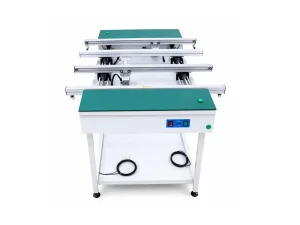
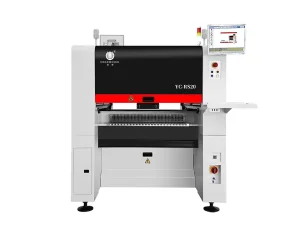
High-precision hardware engineered for modern PCB manufacturing performance.
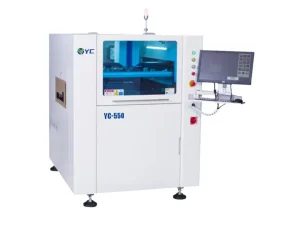
 Yichun Electronic